
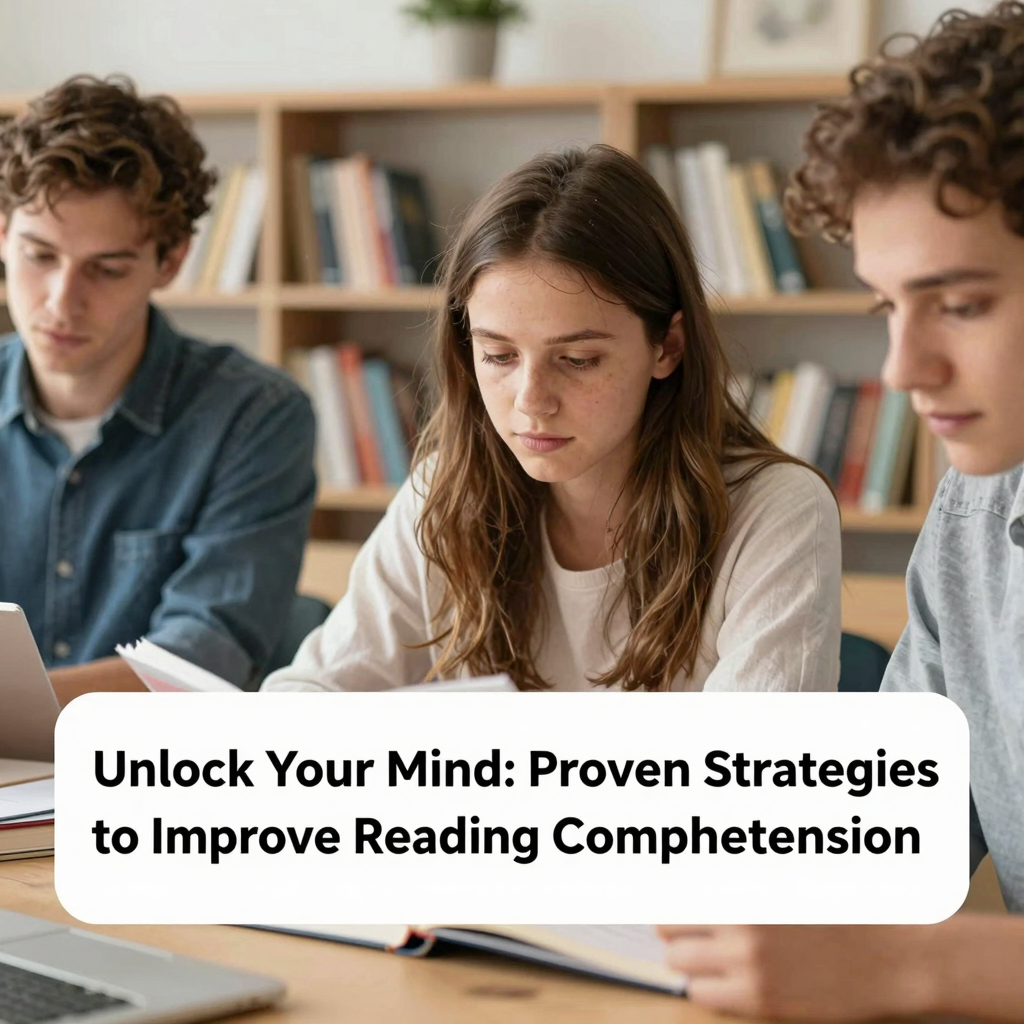
Reading is more than moving your eyes across words on a page. True reading involves absorbing ideas, connecting concepts, questioning assumptions, and walking away with a deeper understanding. Yet many people struggle to retain what they read or to explain a complex article moments after finishing it. If you have ever reached the bottom of a page and realized you have no idea what you just read, you are not alone. Reading comprehension is a skill, not a fixed talent, and like any skill, it can be developed with deliberate practice and the right strategies. This article explores practical techniques to help you read more actively, retain more information, and engage with texts on a deeper level.
In an age of constant digital distraction, the ability to read deeply is becoming both rarer and more valuable. Whether you are a student tackling dense textbooks, a professional navigating reports and contracts, or a lifelong learner exploring new ideas, improving your reading comprehension can transform the way you process information. The strategies below are not quick hacks; they are proven methods rooted in cognitive science and reading research. By applying them consistently, you can train your brain to become a more efficient and thoughtful reader.
What Is Reading Comprehension, Really?
Reading comprehension is the ability to process written text, understand its meaning, and integrate that meaning with what you already know. It involves several cognitive processes working together: decoding words, recognizing vocabulary, parsing sentence structure, making inferences, and monitoring your own understanding. When these processes work smoothly, reading feels effortless. When one process breaks down, comprehension suffers.
Many people assume that comprehension is simply about understanding the words on the page. But true comprehension goes far beyond literal meaning. It requires you to read between the lines, identify the author’s purpose, evaluate arguments, and connect ideas across paragraphs and chapters. A reader with strong comprehension can summarize a text accurately, explain its main ideas, and apply its insights to new situations. This is why improving comprehension is not just about reading more; it is about reading better.
The Difference Between Decoding and Understanding
Decoding is the ability to translate written symbols into sounds and words. It is a foundational skill, but it is not the same as comprehension. You can decode every word in a medical journal article and still have no idea what it means. Understanding requires background knowledge, vocabulary, and the ability to organize information logically. If you find yourself reading fluently but remembering little, your decoding skills may be fine, but your comprehension strategies may need work.
Common Obstacles to Comprehension
- Limited vocabulary: Unfamiliar words force your brain to stop and decode, breaking the flow of understanding.
- Lack of background knowledge: New information is easier to understand when it connects to something you already know.
- Passive reading: Reading without questioning, predicting, or summarizing can lead to shallow processing.
- Distractions: Multitasking and digital interruptions fragment attention, making deep comprehension nearly impossible.
- Poor working memory: If you cannot hold earlier parts of a text in mind, you may struggle to follow long arguments or narratives.
Build a Strong Foundation: Vocabulary and Background Knowledge
Comprehension rests on two pillars: vocabulary and background knowledge. Without a strong vocabulary, you will constantly stumble over unfamiliar words. Without background knowledge, you will struggle to connect new ideas to existing mental frameworks. The good news is that both can be developed intentionally.
Expand Your Vocabulary Intentionally
You do not need to memorize a dictionary to improve comprehension, but you do need to build a habit of learning new words. When you encounter an unfamiliar word, do not skip over it. Pause and consider the context. Often, the surrounding sentences provide clues to the word’s meaning. After you finish reading, look up the word and write it down in a personal vocabulary journal. Review your journal regularly and try using new words in your own writing or conversation.
- Read a wide range of genres, including nonfiction, fiction, journalism, and essays.
- Use a dictionary or vocabulary app to look up unfamiliar words immediately.
- Learn common roots, prefixes, and suffixes to decode unfamiliar words more quickly.
- Keep a running list of new words and review it weekly.
- Practice using new words in sentences to cement them in your long-term memory.
Activate and Build Background Knowledge
Before you read a new text, take a few minutes to activate what you already know about the topic. Ask yourself: What do I already know about this subject? What have I read or experienced that relates to this? This mental warm-up prepares your brain to make connections. If you know very little about the topic, spend a few minutes reading a summary or watching a short video to build a basic framework. The more you know about a subject, the easier it is to understand new material about it.
Building background knowledge is a long-term investment. Read broadly across subjects, even those outside your comfort zone. The more varied your mental library, the more hooks you have for new information. For example, if you understand basic economics, you will find articles about inflation or supply chains much easier to follow. If you know world history, you will better understand modern geopolitical news.
Pre-Reading Strategies That Set You Up for Success
Most people dive straight into a text without any preparation. This is a mistake. Pre-reading strategies create a mental roadmap that helps you organize information as you read. Taking just a few minutes before you begin can dramatically improve your comprehension.
Preview the Text
Before reading, scan the entire text. Look at the title, headings, subheadings, bolded words, images, captions, and any summary or conclusion. This gives you a sense of the structure and main ideas. For a book, read the table of contents, chapter summaries, and back cover. For an article, read the introduction and conclusion first. Previewing primes your brain to look for key points and makes the actual reading more meaningful.
Set a Clear Purpose
Ask yourself why you are reading. Are you reading for pleasure, to gather information, to evaluate an argument, or to prepare for a discussion? Your purpose will influence how you read. If you are reading for pleasure, you might focus on immersion and emotional connection. If you are reading for information, you might focus on identifying main ideas and supporting evidence. A clear purpose keeps you engaged and helps you filter relevant information from extraneous detail.
Ask Predictive Questions
Based on your preview, make predictions about the text. What do you think the author will argue? What questions do you hope the text will answer? Write these predictions down. As you read, check whether your predictions were correct. This simple strategy turns reading into an active search for answers, which improves focus and retention.
Active Reading: How to Engage With the Text
Passive reading is the enemy of comprehension. When you read passively, your eyes move across the page while your mind wanders. Active reading, by contrast, requires you to interact with the text. You highlight, annotate, question, and summarize as you go. This keeps your brain engaged and forces you to process information more deeply.
Annotate as You Read
Annotation is one of the most effective active reading strategies. Use a pencil, pen, or digital highlighting tool to mark important passages, unfamiliar words, and confusing sections. Write brief notes in the margins: “main idea,” “evidence,” “question,” “disagree,” or “connection.” Your annotations should reflect your thinking process. Avoid highlighting everything; instead, mark only the most important points. When you return to the text later, your annotations will serve as a roadmap to your own understanding.
Visualize Concepts and Scenes
Your brain processes images more easily than abstract words. When you read, try to create mental pictures of what the author is describing. If you are reading a novel, imagine the characters, settings, and actions. If you are reading a nonfiction text, visualize the process, timeline, or data. For complex concepts, draw diagrams or mind maps. Visualization strengthens memory and helps you see relationships between ideas.
Chunk Your Reading
Reading a long text in one sitting can overwhelm your working memory. Instead, break the text into manageable chunks. Read a paragraph or a section, then pause and process what you have read. Ask yourself: What was the main idea? What details support it? How does this section connect to the previous one? This stop-and-process technique prevents cognitive overload and gives your brain time to consolidate information.
Questioning Techniques to Deepen Understanding
Good readers constantly ask questions. Questioning keeps you curious and engaged, and it helps you monitor your own understanding. If you cannot answer questions about a text, that is a signal to slow down and reread.
There are several types of questions you can ask while reading:
- Literal questions: What does the author say directly? Who, what, when, where, and how?
- Inferential questions: What is the author implying? What can I conclude from the evidence?
- Evaluative questions: Is the argument logical? Is the evidence strong? Do I agree?
- Connection questions: How does this relate to what I already know? How does it connect to other texts or real-world events?
Try turning headings into questions before you read. For example, if a heading says “The Causes of Inflation,” ask yourself, “What are the main causes of inflation?” Then read to find the answer. This simple technique transforms passive reading into an active search for information.
Summarize and Synthesize While You Read
Summarization forces you to identify the most important ideas and express them in your own words. You cannot summarize effectively if you do not understand the text. Therefore, practicing summarization is one of the best ways to improve comprehension.
The 3-2-1 Method
After reading a section or chapter, try this simple exercise:
- Write down 3 things you learned.
- Write down 2 questions you still have.
- Write down 1 sentence that summarizes the entire section.
This method encourages you to process information, monitor gaps in your understanding, and condense complex ideas into a single clear statement. It is quick, portable, and works for almost any type of text.
Teach Someone Else
The ultimate test of comprehension is whether you can explain a concept to someone else. When you teach, you are forced to organize your thoughts, clarify your understanding, and identify areas where your knowledge is fuzzy. After reading an article or chapter, try explaining the main ideas to a friend, colleague, or even an imaginary audience. If you struggle to explain it simply, go back and reread the difficult parts. Teaching is a powerful form of learning.
Improve Focus and Working Memory
Even the best reading strategies fail if you cannot focus. Deep reading requires sustained attention and a strong working memory. In today’s world of constant notifications and endless scrolling, focus is a skill that must be deliberately trained.
Eliminate Distractions
Create a reading environment that supports concentration. Put your phone in another room or turn off notifications. Close unnecessary browser tabs. Choose a quiet space with comfortable lighting. If you read on a screen, use a distraction-free mode or reading app. The fewer external interruptions you face, the easier it is to enter a state of deep focus.
Practice Mindfulness
Mindfulness is the practice of paying attention to the present moment without judgment. It can help you notice when your mind wanders during reading and gently bring it back to the text. Before you begin reading, take a few deep breaths and set an intention to focus. When you notice your thoughts drifting, do not criticize yourself. Simply acknowledge the distraction and return your attention to the page. Over time, this practice strengthens your ability to sustain attention.
Speed Reading vs. Comprehension: Finding the Balance
Many people want to read faster, but speed is meaningless without comprehension. Speed reading courses often promise dramatic results, but research shows that as reading speed increases beyond a certain point, comprehension drops sharply. The goal should not be to read as fast as possible, but to read at a pace that allows you to understand and retain the material. For difficult or unfamiliar texts, slow down. For easier texts, you can naturally increase your pace.
Instead of chasing speed, focus on improving your reading efficiency. Eliminate subvocalization only when it helps, use your finger or a pen to guide your eyes, and practice expanding your peripheral vision. But always prioritize understanding over pace. A slower reader who truly comprehends a text is far better off than a fast reader who remembers nothing.
Build a Sustainable Reading Habit
Improving reading comprehension is not a one-time project. It requires consistent practice and a long-term commitment. The best way to improve is to read regularly, deliberately, and across a variety of genres. Set aside dedicated time for reading each day, even if it is only twenty minutes. Treat reading as a skill to be developed, not just a pastime.
- Read every day: Consistency matters more than quantity. A daily reading habit keeps your skills sharp.
- Read widely: Explore fiction, nonfiction, journalism, essays, and academic writing. Each genre challenges your brain in different ways.
- Join a book club or discussion group: Talking about what you read deepens understanding and exposes you to new perspectives.
- Track your progress: Keep a reading journal where you record key ideas, new vocabulary, and personal reflections.
- Be patient: Comprehension improves gradually. Do not get discouraged if progress feels slow. Every deliberate reading session builds your mental muscles.
Conclusion
Improving reading comprehension is a journey, not a destination. It involves building a strong vocabulary, activating background knowledge, reading actively, asking questions, summarizing, and protecting your focus. Each strategy contributes to a deeper and more satisfying reading experience. The ultimate reward is not just better grades or job performance, but a richer intellectual life. When you read deeply, you open yourself to new ideas, new worlds, and new possibilities. So pick up a book, apply these strategies, and watch your understanding grow. Reading comprehension is not about reading more; it is about reading better. The more you practice, the more natural and effortless it becomes.
