
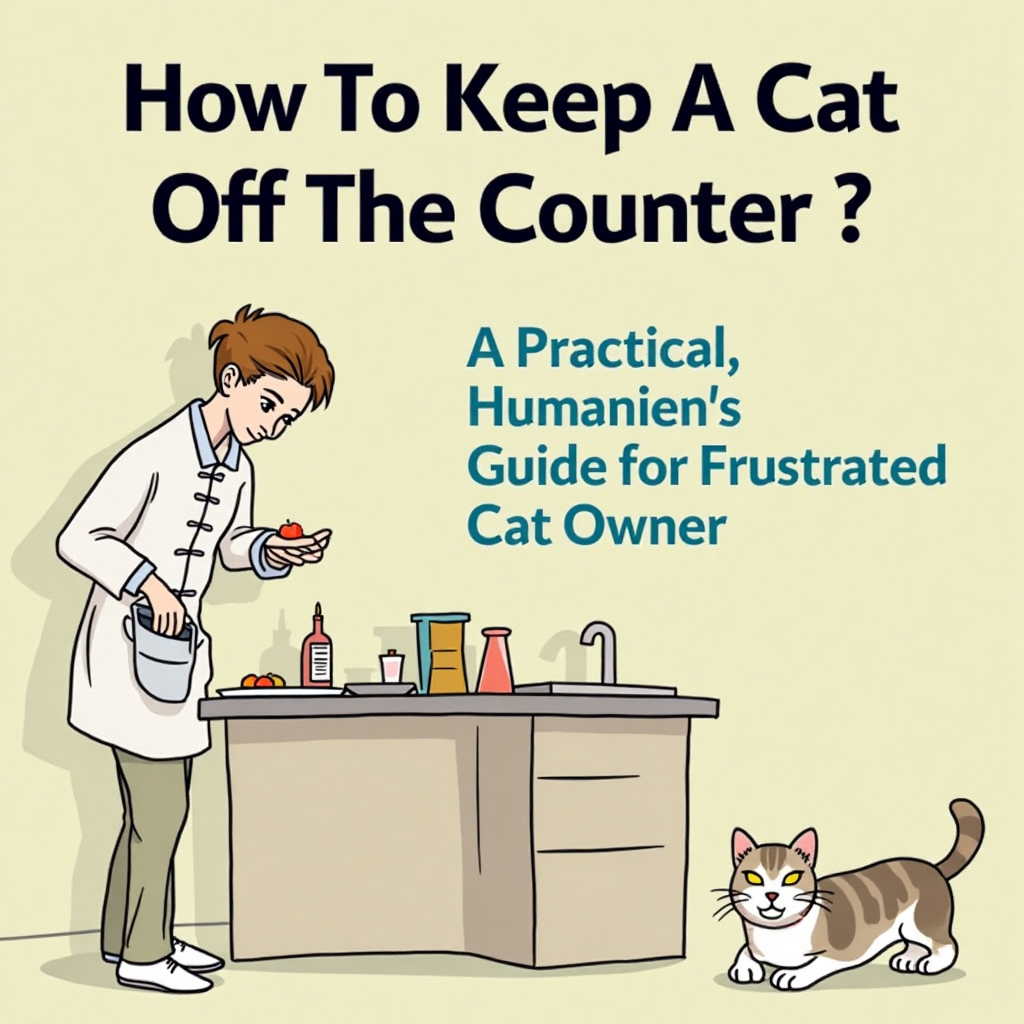
If you have ever walked into your kitchen only to find your cat casually strolling across the countertop, sniffing the butter dish, or settling down for a nap next to the fruit bowl, you are not alone. Counter surfing is one of the most common complaints among cat owners, and unfortunately, it is also one of the most misunderstood. Cats are not jumping onto counters to spite you, and they are not doing it because they are inherently disobedient. In almost every case, your cat is simply following instincts that make perfect sense to them. The good news is that with patience, consistency, and the right strategies, you can teach your cat to stay off the counter without damaging your bond or resorting to fear-based tactics.
This guide will walk you through exactly why cats love counters, what you can do to make the behavior less appealing, how to train desirable alternatives, and which deterrents are safe and effective. Whether you have a curious kitten or a seasoned counter-jumping veteran, the techniques in this article will help you create a home where both you and your cat can feel comfortable, safe, and respected.
Why Your Cat Finds the Counter Irresistible
Before you can effectively change your cat’s behavior, it helps to understand why the counter is so attractive in the first place. From a feline perspective, the kitchen counter is actually a very desirable piece of real estate. It is high up, which gives your cat a better view of their environment and helps them feel safe from perceived threats. In the wild, cats climb trees and rocks to survey their territory, and your countertop serves a similar function indoors. Height offers security, and for a naturally cautious animal, that sense of security is worth a lot.
Another major factor is food. Even if you clean your counters thoroughly, the lingering smell of food can be incredibly enticing to a cat. Crumbs, grease, spills, and even the faint scent of last night’s dinner can draw a curious nose upward. Cats are opportunistic feeders by nature, meaning they will investigate any area that might contain a snack. If your cat has ever found a tasty morsel on the counter, even once, that single reward can reinforce the behavior for weeks or months.
Finally, counters often offer interesting sensory experiences. There may be water dripping from the faucet, plants to chew on, windows to look through, or simply cool, smooth surfaces that feel good under their paws. For an indoor cat, the counter can become a source of entertainment, comfort, and stimulation. Understanding these motivations is the first step toward changing the behavior, because it allows you to replace the counter with more appropriate alternatives that meet the same needs.
Why It Matters Beyond Simple Annoyance
While finding cat hair on your kitchen counter is frustrating, the issue goes deeper than cleanliness. Counters are where you prepare food, and cats naturally carry bacteria on their paws from the litter box. Even the most fastidious indoor cat can track microscopic particles that you do not want anywhere near your meals. For households with young children, elderly family members, or anyone with a compromised immune system, keeping cats off food preparation surfaces is an important health consideration.
There is also a safety angle. Hot stovetops, sharp knives, open containers, and toxic foods like onions, garlic, chocolate, or xylitol can all pose dangers to a curious cat. A cat that routinely jumps onto counters is more likely to encounter something harmful. Additionally, a cat that drinks from a sink may ingest cleaning product residue or scalding water. Teaching your cat to stay off the counter is not just about protecting your kitchen; it is also about protecting your cat from preventable accidents.
Understanding the Feline Mindset
Cats do not respond to training the same way dogs do. While many dogs are eager to please their humans, cats are more motivated by personal comfort, safety, and access to resources. This does not mean cats cannot be trained, but it does mean the approach must respect their natural instincts. If you simply shout, clap, or shoo your cat off the counter, they may learn to avoid the counter only when you are present. The goal is to make the counter itself less rewarding and to teach an alternative behavior that satisfies the same underlying need.
Height Is a Need, Not a Preference
One of the most important things to understand is that your cat has a genuine need for vertical space. Cats are both predator and prey in the wild, and elevation gives them a strategic advantage for hunting while also providing a safe retreat from larger animals. In your home, this need does not disappear simply because there are no predators. If your cat is constantly seeking high places, consider whether you have provided acceptable climbing surfaces. Cat trees, shelves, window perches, and even cleared sections of a bookshelf can satisfy this natural desire. When you remove the counter as an option without offering a replacement, you are likely to see the behavior return or shift to another undesirable surface.
Curiosity and Food Drive Are Powerful Motivators
Cats are incredibly curious creatures, and their sense of smell is far more sensitive than ours. The kitchen is a symphony of interesting scents, and even a spotless counter can smell like food to your cat. If your cat is food-motivated, the counter may represent a potential jackpot. This is why punishing the behavior rarely works long-term. Instead, you need to remove the reward value of the counter and make the alternative more appealing. A hungry cat will always be tempted by an accessible food scent, so managing food sources is essential.
Setting Your Cat Up for Success: Environmental Changes
Before you begin active training, make changes to the environment that reduce the likelihood of counter jumping. Management is one of the most effective tools in any behavior modification plan because it prevents the unwanted behavior from being rehearsed. Every time your cat jumps on the counter and finds something rewarding, the behavior is strengthened. By removing those rewards and making the counter less accessible, you stop reinforcing the habit.
Provide Better Alternatives
Your cat needs somewhere to climb, perch, and observe. If you do not provide an acceptable high spot, the counter will continue to be the most attractive option. Place a sturdy cat tree near the kitchen, preferably one that is taller than the counter. Add a window perch or a comfortable shelf where your cat can watch the action from a safe distance. You can make these spaces even more appealing by placing treats, catnip, or a favorite blanket on them. The idea is to create a “yes” space that meets the same need for height and observation.
- Cat tree with a view: Position it near a window or in a spot where your cat can see the kitchen activity.
- Wall shelves: Install sturdy shelves that allow your cat to climb and survey the room without touching the counter.
- Window hammock: A soft perch that attaches to the window gives your cat a warm, elevated resting spot.
- Tall scratching post with a top platform: This satisfies both the need to climb and the need to scratch.
Manage Counter Temptations
Take a hard look at your countertops and remove anything that might tempt your cat. Keep food in sealed containers, clean spills immediately, and avoid leaving dirty dishes overnight. If you keep fruit on the counter, consider moving it to a hanging basket or a closed pantry. Even items that are not food, such as hair ties, bottle caps, or small objects, can become toys in your cat’s mind. A clutter-free counter is far less interesting than one full of potential treasures.
- Store all food securely: Use airtight containers and keep them in cabinets or the refrigerator.
- Wipe down counters after every meal: Use a pet-safe cleaner to remove lingering food smells.
- Remove small objects: Anything that rolls, crinkles, or dangles is a toy to a cat.
- Cover trash or keep it in a cabinet: The smell of garbage can be a powerful lure.
- Keep the sink empty: Cats may jump up to drink from a dripping faucet or explore a pool of water.
Training Techniques That Actually Work
Once you have made environmental changes, you can begin teaching your cat what you want them to do instead of jumping on the counter. Positive reinforcement is the most effective and humane approach. The goal is to reward your cat for keeping four paws on the floor or for going to a designated spot. Over time, your cat will learn that the alternative behavior is more rewarding than the counter ever was.
Teach a Reliable “Off” Cue
Teaching your cat to respond to an “off” cue is helpful for those moments when they do jump up despite your best efforts. To train this, wait until your cat is on a surface you do not mind, such as a chair or a cat tree. Hold a treat near their nose and then lure them down to the floor while saying “off.” As soon as all four paws touch the floor, click or use a marker word like “yes,” and give the treat. Practice this several times a day in different locations. With enough repetition, your cat will associate the word “off” with coming down and receiving a reward. When your cat jumps on the counter, you can calmly say “off” and reward them when they comply.
Clicker Training for Desired Behaviors
Clicker training is a powerful way to communicate with your cat. The clicker marks the exact moment your cat performs the desired behavior, and the treat provides the reward. To keep your cat off the counter, teach them to go to a mat, bed, or perch on cue. Start by clicking and treating whenever your cat voluntarily looks at or steps toward the target area. Gradually require more movement before you click. Eventually, you can add a cue like “go to your spot.” When you are working in the kitchen, send your cat to their spot and reward them frequently for staying there. This gives your cat a clear job to do instead of jumping on the counter.
Reward Four Paws on the Floor
In addition to teaching a specific alternative, actively reward your cat whenever you see them with all four paws on the floor in the kitchen. This is especially important during meal preparation. Keep a small container of treats nearby and toss one to your cat every few minutes while they remain on the floor. If your cat is lying calmly on a mat, praise them and give a treat. By making the floor a rewarding place to be, you decrease the perceived value of the counter. Consistency is key, so make sure everyone in the household follows the same routine.
Safe Deterrents to Reinforce Boundaries
While training is underway, you may want to use deterrents that make the counter less appealing without causing pain or fear. The best deterrents are those that work even when you are not in the room. This helps your cat learn that the counter itself is unpleasant, not just that you are unpleasant when they are on it.
- Sticky paws tape: Double-sided tape designed for pets can be placed on the edge of the counter. Cats dislike the sticky sensation on their paws and will often avoid the area after a few attempts.
- Aluminum foil or lightweight baking sheets: Cats generally dislike the feel and sound of foil. Place sheets of foil on the counter, or arrange lightweight baking sheets so they make a noise if your cat jumps up.
- Motion-activated air sprays: Devices like Ssscat release a harmless burst of air when they detect motion. This startles the cat without hurting them and can be very effective at keeping cats away from specific areas.
- Scat mats: These plastic mats have soft nubs that are uncomfortable but not painful. They can be placed on counters to discourage walking or lying down.
- Scent deterrents: Many cats dislike citrus, lavender, or eucalyptus. Use a pet-safe spray on the counter, but be cautious with essential oils, as some can be toxic to cats. Always choose products specifically formulated for feline use.
It is important to combine deterrents with training and environmental enrichment. Deterrents alone may keep a cat off one counter, but the cat will often find another surface or simply wait until the deterrent is removed. The true solution lies in teaching your cat that there are better alternatives available.
Common Mistakes to Avoid
When trying to keep a cat off the counter, many well-meaning owners make mistakes that actually make the problem worse. Avoiding these pitfalls will save you time, frustration, and setbacks.
- Punishing your cat after the fact: Cats do not connect punishment to behavior unless it happens immediately. If you scold your cat for being on the counter ten minutes after they jumped up, they will not understand. They will only learn that you are unpredictable or scary.
- Using a spray bottle: Spraying your cat with water is a common but ineffective and potentially harmful punishment. It teaches your cat to fear you, not the counter, and many cats simply learn to jump up when you are not around.
- Yelling or clapping loudly: Startling your cat can increase anxiety and lead to stress-related behaviors such as hiding, aggression, or inappropriate elimination.
- Being inconsistent: If you allow your cat on the counter sometimes but not others, you create confusion. The counter must be off-limits at all times if you want the training to stick.
- Forgetting to reward good behavior: It is easy to ignore your cat when they are being good, but rewarding calm, four-paws-on-the-floor behavior is essential for lasting change.
- Relying on one method alone: Deterrents without training, training without management, or management without enrichment will produce incomplete results. A multi-layered approach works best.
A Step-by-Step Plan to Reclaim Your Counters
Now that you understand the principles, here is a practical plan you can follow over the course of several weeks. Remember that every cat is different, and progress may be slow. Patience and consistency are your greatest allies.
Week 1: Management and Observation
During the first week, focus on managing the environment and observing your cat’s behavior. Remove all food and enticing objects from the counters. Clean surfaces thoroughly to eliminate food smells. Set up a cat tree, shelf, or perch near the kitchen and make it inviting with treats, catnip, or a soft blanket. Pay attention to when and why your cat jumps on the counter. Is it always when you are cooking? Is your cat seeking attention, food, or a better view? This information will help you tailor your training plan.
Week 2: Teaching an Alternative
In the second week, begin actively training your cat to go to their designated spot. Use a clicker and high-value treats. Start by rewarding any interaction with the cat tree or perch. Then shape the behavior by rewarding your cat for placing one paw on it, then two, then all four. Add a verbal cue such as “go to your spot” once your cat reliably moves toward the area. Practice this several times a day in short sessions. During this week, continue managing the counter and do not leave food out unattended.
Week 3: Adding Deterrents and Fading Treats
By the third week, your cat should understand that their spot is a great place to be. Now you can add a deterrent to the counter to reduce the likelihood of jumping when you are not actively training. Place sticky tape, foil, or a motion-activated air spray on the edge of the counter. At the same time, begin reducing the frequency of treats for simply going to the spot, but continue rewarding periodically. This intermittent reinforcement actually strengthens the behavior over time. When you are in the kitchen, reward your cat for staying on the floor or on their spot. Use a calm, cheerful voice to encourage them.
Week 4: Consistency and Maintenance
By the fourth week, many cats will have significantly reduced or eliminated their counter-jumping habit. Continue to be consistent about not leaving food out and about rewarding desirable behavior. You may be able to remove some deterrents gradually, but keep them handy in case of relapses. Every member of the household must follow the same rules. If one person allows the cat on the counter, the training will break down. Regularly refresh your cat’s vertical spaces by rotating toys, adding new treats, or placing a cozy blanket on the perch to keep it appealing.
When to Seek Professional Help
In some cases, counter-jumping may be part of a larger behavioral or medical issue. If your cat is suddenly jumping on counters more frequently, or if the behavior is accompanied by excessive vocalization, changes in appetite, or other unusual signs, schedule a visit to your veterinarian. Medical problems such as hyperthyroidism, anxiety, or cognitive changes can alter a cat’s behavior. If your cat is healthy and you have tried the strategies in this article without success, consider consulting a veterinary behaviorist or a certified cat behavior consultant. These professionals can evaluate your specific situation and develop a customized behavior modification plan.
Conclusion
Keeping your cat off the counter is not about dominating your pet or proving who is in charge. It is about creating an environment where your cat can express their natural instincts in safe, acceptable ways while keeping your food preparation areas clean and hazard-free. By understanding why your cat loves the counter, providing better alternatives, managing temptations, and using positive reinforcement, you can teach your cat to make better choices without fear or conflict.
Be patient with your cat and with yourself. Behavior change takes time, especially when it involves deeply rooted instincts. Celebrate small victories, stay consistent, and remember that every time you reward your cat for being on the floor or on their cat tree, you are building a stronger, more trusting relationship. With the right approach, your countertops can become a cat-free zone, and your cat can still enjoy a rich, fulfilling life full of climbing, perching, and observing the world from a more appropriate vantage point.
