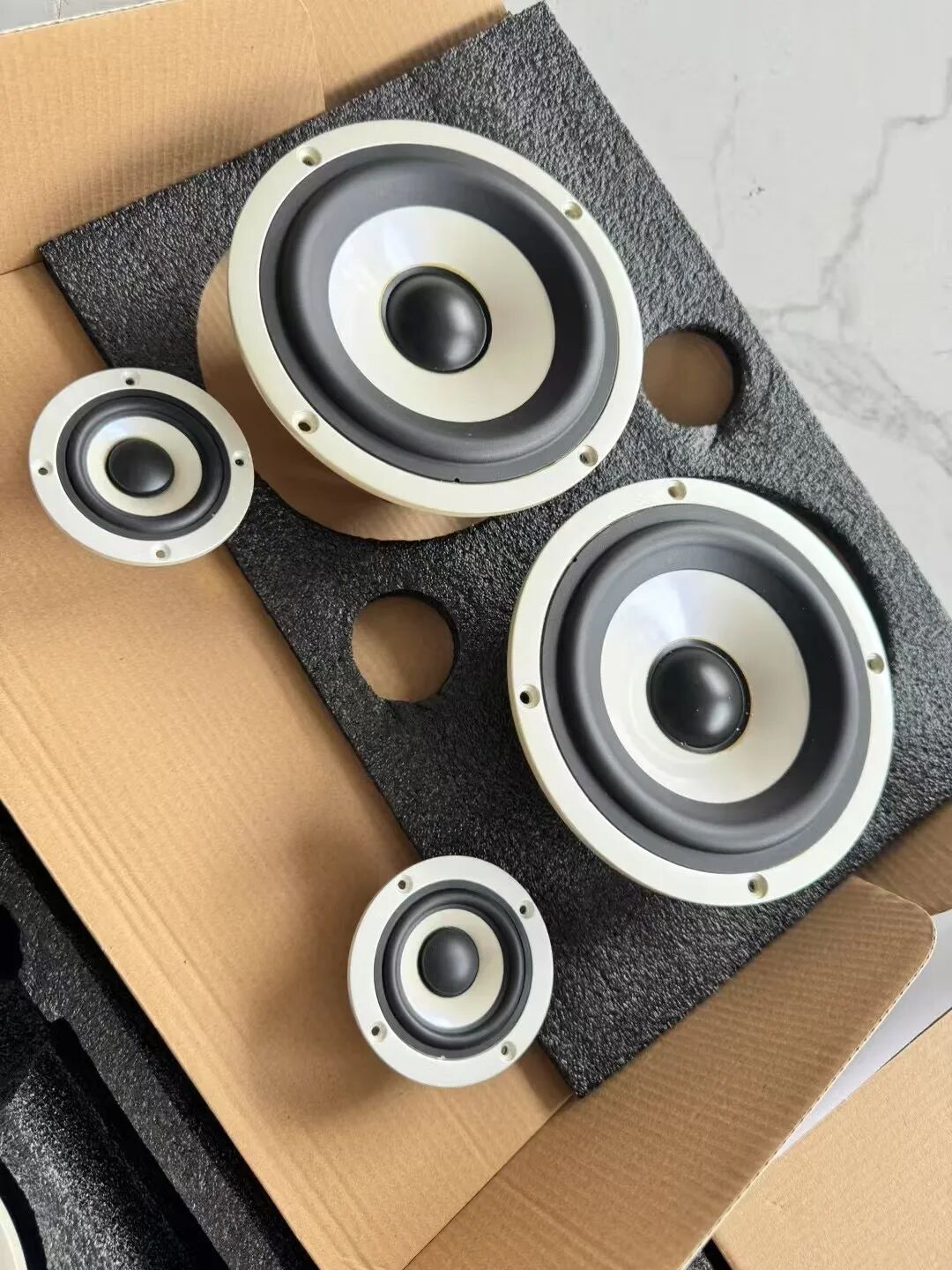
The ultimate pursuit of vocal restoration: In-depth evaluation of Biwei A series two-way frequency, exploring the king logic behind mica diaphragm and precise transmission
▶ In-depth analysis: Why is the Biwei A-series two-way frequency known as the “reference speaker benchmark in the car audio modification industry”?
In the field of high-end car audio that pursues the ultimate acoustic performance, the brand BEWITH has long been synonymous with “German precision acoustic engineering” and “purist sound philosophy”. And its A-series two-way speaker set is a classic handed down from generation to generation that has been verified by the market and respected by countless enthusiasts. This system does not rely on exaggerated “head-blasting” low-frequency impact to gain sensory stimulation at the first listening, but relies on its soundExtremely accurate restoration capabilities, near-zero loss signal transmission characteristics, and seamless frequency response connection, conquered the most picky professional players and golden ears listeners in the world, thus establishing its unshakable “reference level” position in the industry.

The core of supporting its excellent listening performance lies in the three revolutionary acoustic technology highlights adopted by the Biwei A series. We will conduct an in-depth analysis one by one below.
1. Unidirectional precise sound generation and transmission technology · Achieve nearly zero loss of direct sound
The common dilemma of traditional loudspeakers: The sound spreads spherically after being emitted from the diaphragm, and it is easy to have complex reflection and diffraction with irregular door interior panels, glass and other surfaces. These “secondary sounds” are mixed with the original sound waves, resulting in serious phase interference, detail blurring and sound image localization drift, which is the so-called “reflection distortion”.
Solutions for Biwei A Series: Innovatively adoptedHigh directivity Waveguide Technology for precision calculation (Waveguide Technology)。 The principle is similar to installing an “optical lens” for sound waves, so that the energy of sound waves can be highly directionally transmitted like a highly focused laser beam and directly and efficiently projected into the listener’s ears. This technology minimizes the unnecessary reflection and energy loss of sound in the carriage, and ensures that the rich detailed information in the recording can be restored almost without loss. This pure and unstained direct sound performance makes it reach the peak level in the details of lips and teeth of vocal singing and the reproduction of texture and texture of classical instrument solo.

2. Ultra-wide overlapping frequency response design · creates a silky smooth seamless connection
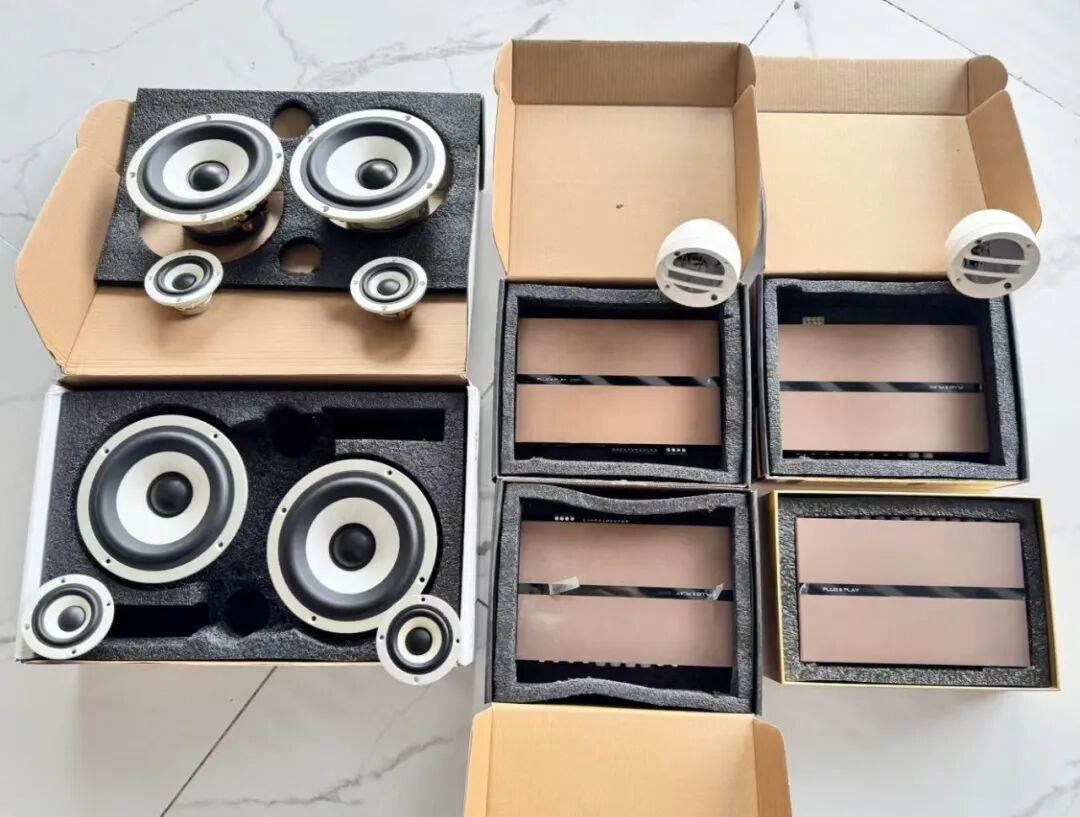
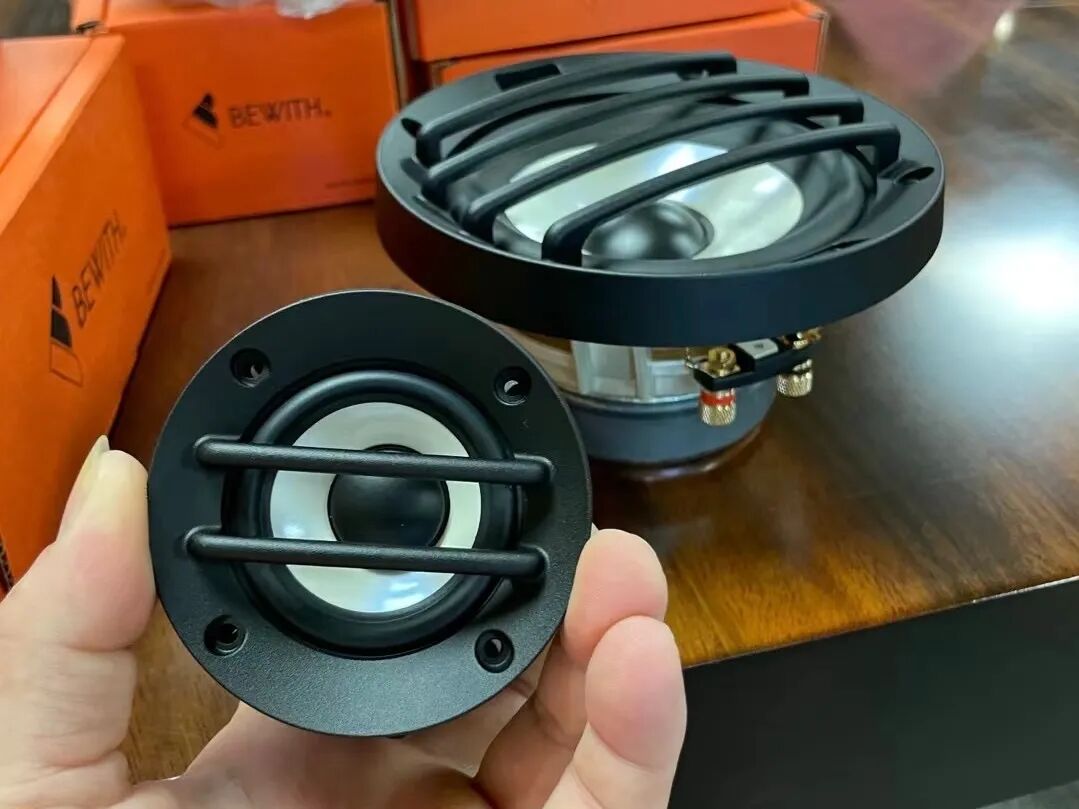
A major challenge of the traditional two-way system is that the frequency band “depression” or “bulge” is prone to appear near the frequency division point, resulting in incoherent timbre. Biwei A series greatly broadens the effective working range of treble and midwoofer units through breakthrough unit design. Its tweeter dives steadily to2.5 kHz, while the mid-bass unit can accurately reach the ground5 kHz, the two form a wide overlapping operating frequency band that far exceeds that of ordinary two-way products.
Sublimation of actual listening experience: This means that the transition from the overtones of high-frequency strings to the bases of mid-frequency vocals is as smooth and natural as silk, without faults or abruptness. Even when performing large-scale symphonies or popular music with complex arrangements, the whole frequency band can maintain the fluency and integrity of “one line”, with seamless sound and balanced energy distribution.
3. Multilayer mica composite diaphragm · “microscope” that reveals microscopic sound details
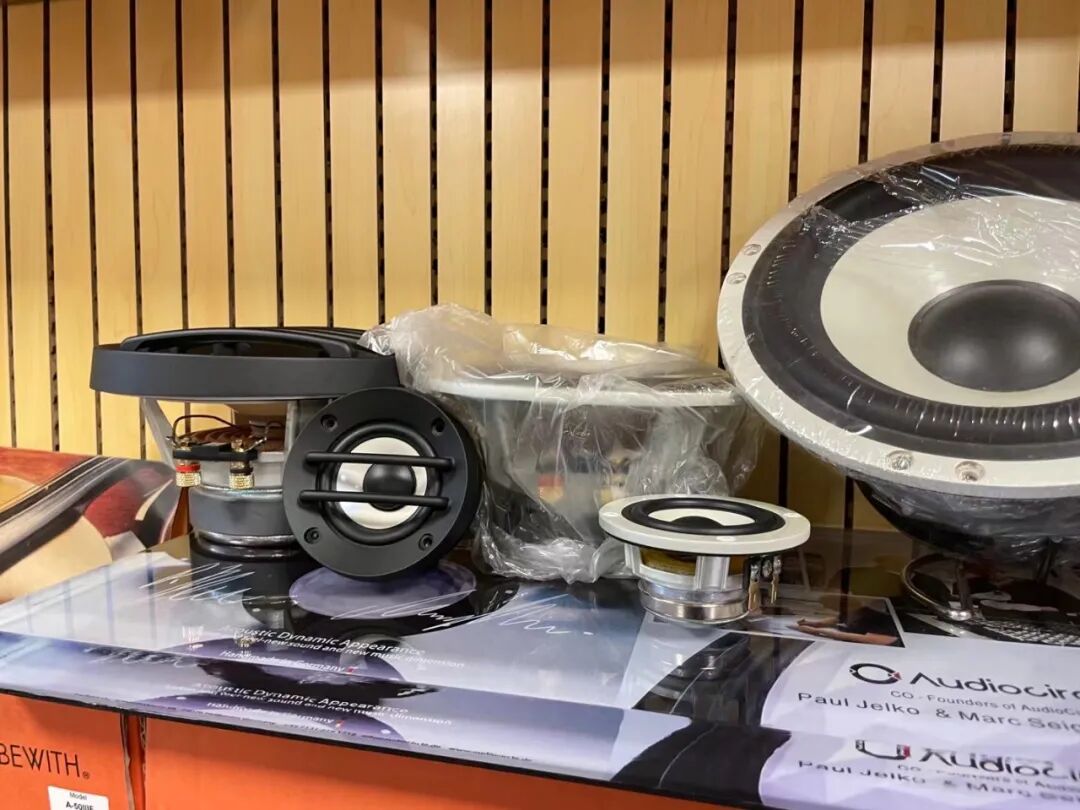
The physical properties of diaphragm materials are the core that determines the “soul” and resolution of speaker timbre. Biwei A Series abandons the common PP (polypropylene) or paper diaphragms and uses specially made diaphragms insteadMultilayer mica composite diaphragm。 Mica materials have an extremely high rigidity-to-mass ratio and excellent internal damping characteristics.
Technical advantages: Extremely high rigidity ensures that the diaphragm is not prone to split vibration during high-speed piston movement, thus greatly reducing distortion; Excellent internal damping can quickly absorb the aftervibration of the diaphragm and achieve lightning-fast transient response. Reflected in the sense of listening, the singer’s weak breath when breathing, the rich harmonic details after the guitar strings are plucked, and even the fleeting subtle rhyme after the triangular iron in the symphony orchestra is striked, all of which can be clearly and distinguishably presented, and the details are amazingly rich. Compared with ordinary PP basin diaphragm, mica diaphragm can reduce the distortion rate in key mid-frequency bands30%The above is the best choice for enthusiasts who pursue monitoring-level accurate restoration.
▶ In-depth modification of door panel box: a precision acoustic operation to “empower” top speakers
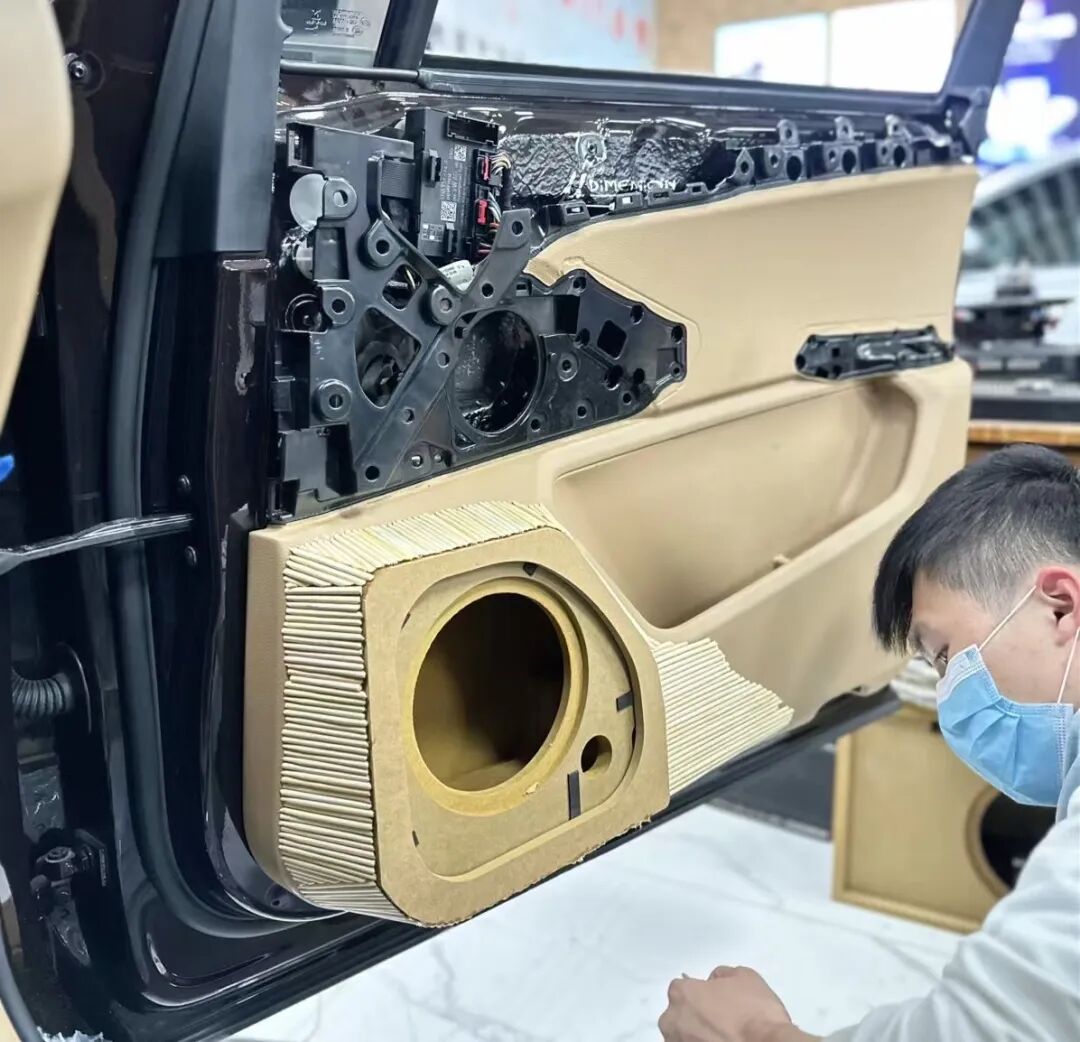
We must be soberly aware that even a top-class speaker like the Biwei A series may not even be able to perform half of its true performance if it is installed in a primitive door environment with poor acoustic characteristics, lax sealing and frequent resonance. Therefore, it is matched for Biwei A seriesHigh-specification, customized door panel box modification, is the absolute prerequisite for unlocking its full potential, and it is also the “touchstone” to measure the core technical strength of a modification shop. This is the core competitiveness that the “Music Broadband” brand insists on and is good at.
Why is door panel box customization known as the “ceiling-level” process of car audio modification?
1. Customized cavity construction based on acoustic modeling
The interior space of the original car door is irregular, full of holes and beams, and it is essentially a “inferior speaker with serious air leakage and chaotic resonance points”. We adoptHigh-precision 3 D scanning technologyObtain accurate data on the interior space of the door, and then combine it with the Thiele-Small parameters of the mid-woofer unit of the Biwei A series to perform acoustic simulation calculations. Subsequently, usingInfusion molding of high strength resin and composite materialTo create an independent acoustic cavity with precise volume, smooth internal structure and complete sealing for the speaker. This process can improve the solidity, strength and clarity of medium and low frequencies50% The above completely solves the problem of “void and stuffy sound” of the original door.
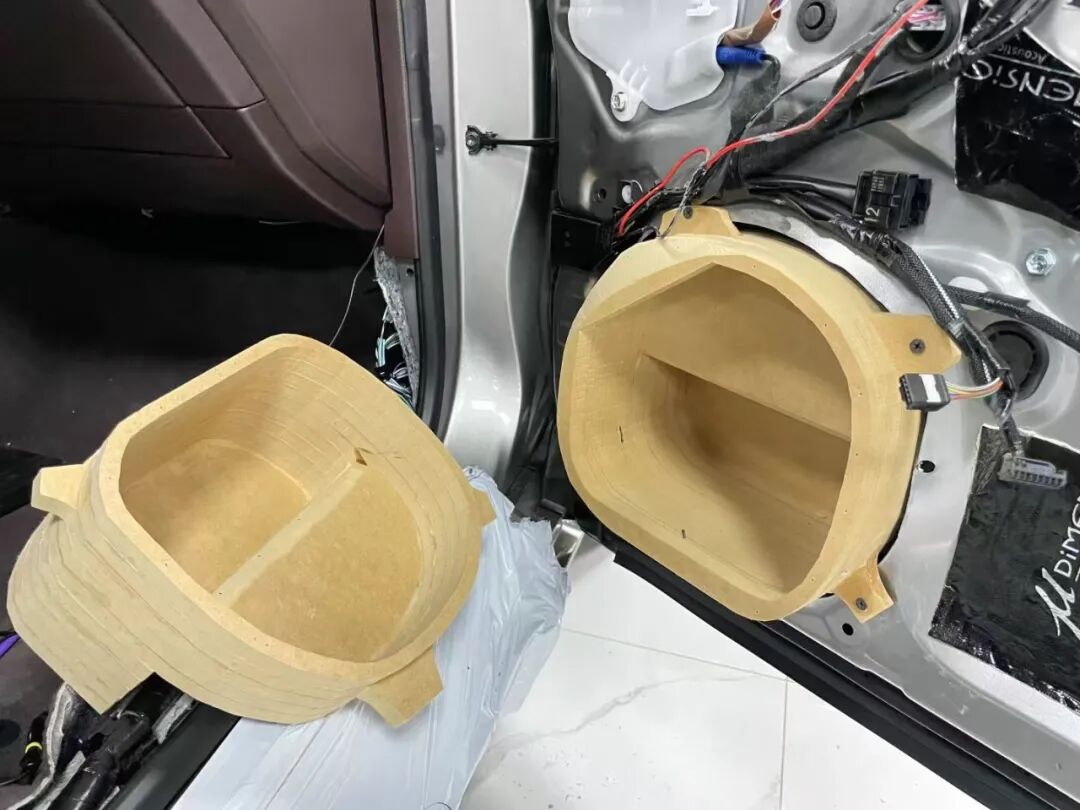
2. Multi-dimensional collaborative shock absorption and rigidity strengthening system
An excellent box needs to strike the perfect balance between suppressing harmful vibration and providing solid support. We embed inside the custom cavityReinforced skeleton of aviation aluminum alloy, greatly improve the overall rigidity of the box, and prevent the deformation of the box itself from causing sound staining under large dynamics. At the same time, between the outside of the box body and the door sheet metal, layMulti-layer high-density sound insulation and vibration-stopping materials with different characteristics, forming a “mass-damping-restraint” layer composite system, which efficiently absorbs and isolates vibration interference from door sheet metal and road surface. Only in this way can the Biwei mica diaphragm work “without distractions” on an extremely stable and quiet platform.
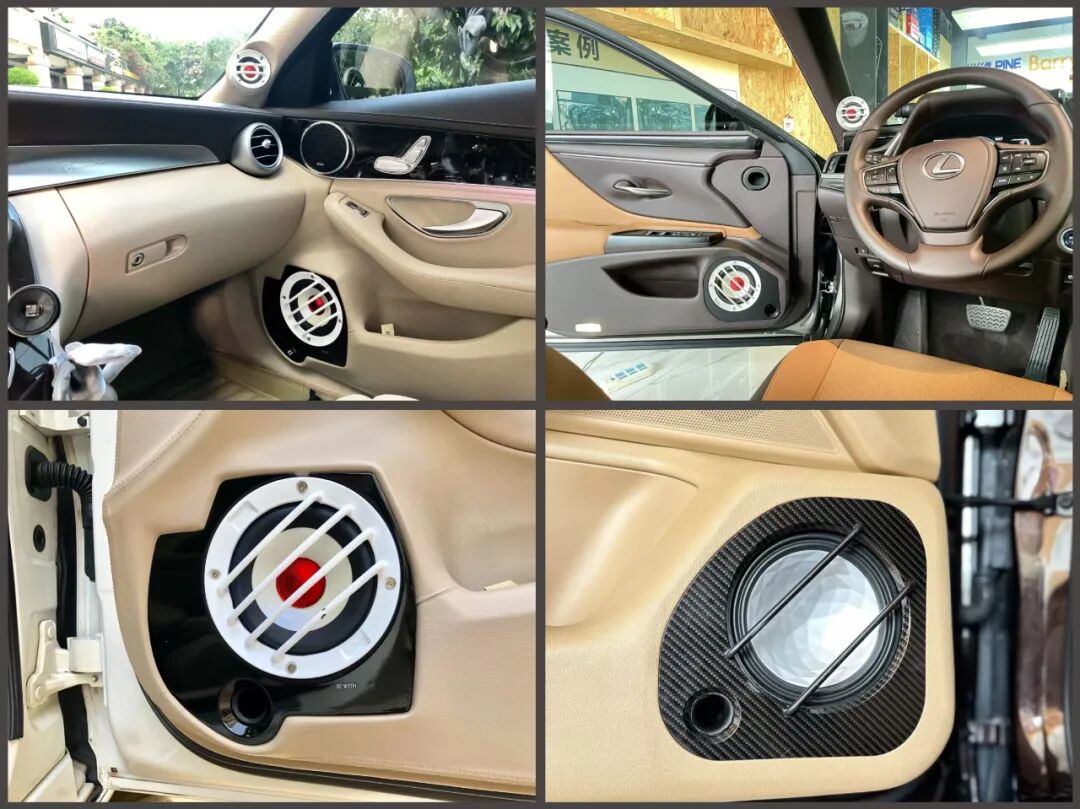
3. Accurate installation and verification guaranteed by professional measurement equipment
Precise craftsmanship requires scientific verification. During installation, we useLaser locatorTo accurately calibrate the installation angle and orientation of the speaker unit to ensure that its sound axis is accurately aligned with the preset “emperor position” listening point. After the installation is complete, useProfessional acoustic test kits (e.g. measuring microphones, audio analyzers)Actually measure the modified frequency response curve, phase consistency and other key data in the car, and compare and fine-tune them with the theoretical performance curve of the horn to ensure that the final effect is as close as possible to its ideal laboratory data in the anechoic room, and minimize the influence of variables during the modification process.
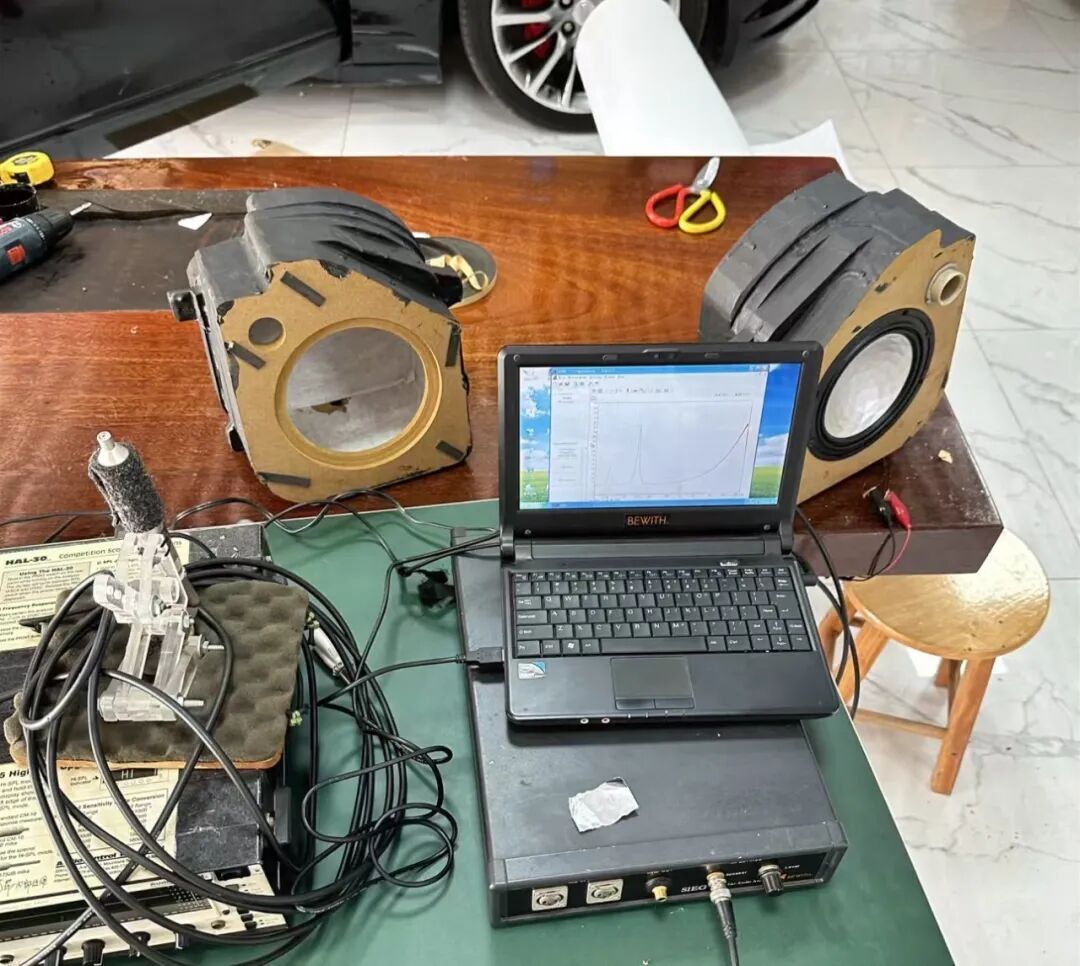
▶ The ideal user portrait of Biwei A-Series two-way system
1. Senior audiophiles who pursue “absolute true restoration” and “high resolution” (I can’t stand too much sound dyeing, mainly listen to jazz Live, classical symphony, vocal fever recording, high-quality Live album, and I am keen to explore every detail in the recording)
2. Sensible players who understand and are willing to invest deeply in the “underlying acoustic environment” (Deeply aware of the great influence of basic processes such as door panels and boxes on the final effect, and willing to invest about 30% or even higher of the total system budget in this, in order to achieve an immediate and long-term stable sound quality leap)
3. Car owners who are deeply troubled by problems such as “muddy sound, stuffy sound, and blurred positioning after modification” and are seeking a cure (The combination of Biwei’s directional transmission technology and professional door panel box modification is the most thorough and effective solution for the complex reflection of the door and box leakage, which are the two major culprits that lead to “stuffy” sound)


You May Also Like

The core pain point of BMW’s audio upgrade: Should it spend a lot of money on replacement or fine tuning? An article explains the ultimate answer

Land Rover Discovery Shenxing: Using “invisible art to reshape low frequencies, in-depth analysis of the 0.8-inch spare tire bass system