
Minimalist acoustic practice: Full analysis of Toyota 86 sports car equipped with Aiwei’s top two-way system
When exploring the art of car audio modifications, the interior space itself is a crucial and challenging acoustic variable. Unlike well-designed home listening rooms, the interior space of each model and even every car is a unique acoustic environment, and its size, shape and interior materials will have a profound impact on the final sound presentation. Especially in carriages such as sports cars, which pursue ultimate lightweight and handling and therefore often sacrifice interior space, building a high-fidelity (HiFi) sound system is a technical challenge that requires precise calculations and in-depth considerations. It requires modifiers not only to know the electroacoustic characteristics of all kinds of audio equipment thoroughly, but also to have in-depth research and practical experience on how to integrate the system under limited or even harsh physical conditions, and how to utilize or overcome the defects of space acoustics. Only in this way can a piece of “semi-finished” equipment be transformed into a complete system that is harmonious with the carriage environment and can release excellent sound quality.
Recently, we were faced with a challenging task: upgrading the sound system of a Toyota 86 coupe. The owner of the car is a philharmonic person who has extremely high standards for sound quality. He has put forward clear and specific requirements for the upgrade effect: the vocals and instruments must be clear, full and rich in texture, and the low frequencies need to be strong and freely retractable, which can accurately restore the rhythm and dynamics in the music. This is undoubtedly a “high-demand” connoisseur. If it is a general family model, the matching scheme to meet such needs is relatively plentiful, but for Toyota 86, its iconic compact body and extremely limited interior space, especially the almost non-existent conventional trunk space, make the selection, layout and installation of every piece of equipment become extremely critical. In addition, the car owner also emphasized that, as the source of the system, the playback host must support the CarPlay function to achieve convenient interconnection of smart devices, and its own sound quality performance must also meet the entry standard of HiFi system. After several rounds of comparison and audition, the customer finally voted for Pioneer DEH-Z 5250 BT, a multimedia player. Regarding the performance and listening experience of this host in actual use, we will share it with you in detail later.
We always believe that the value of professional car audio modification is not only reflected in the final sound result, but also in the transparent, rigorous and detailed construction process. Therefore, we are accustomed to clearly presenting every modification detail-from scheme formulation, equipment selection, construction technology to consumables selection-to our customers through complete graphic records. This is not only to let customers know what kind of “transformation” their cars have experienced, but also to demonstrate our commitment to our professional standards.
Considering the unique space constraints of Toyota 86, the owner’s clear listening needs and budget range, we designed and recommended the following system configuration scheme for it, which strives to maximize sound quality under limited conditions:
1. Sound source core: Pioneer DEH-Z 5250 BT multimedia player. As the starting point of the system, it undertakes multiple responsibilities of audio source output, signal processing and intelligent interconnection.
2. Audio processing brain: Magic Cube DSP audio processor. Provide reliable digital signal processing capabilities within budget, responsible for key adjustments such as frequency division, delay, and equalization. We frankly tell us that if we have a more abundant budget, Biwei DSP will be the more extreme processing choice, which also reserves a clear goal for car owners to upgrade again in the future.
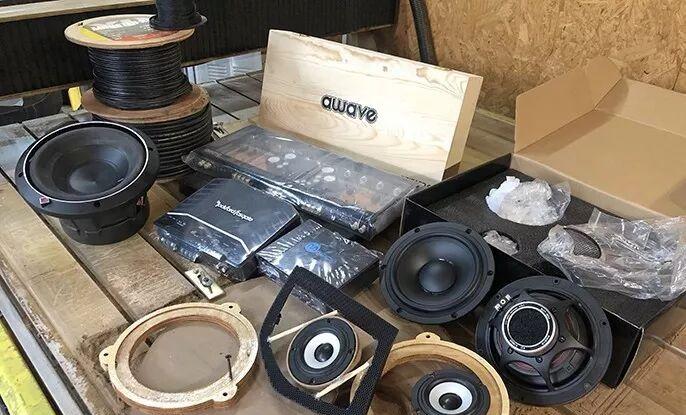
3. Front sound field speaker: Aiwei 62 C high-performance two-way package, and planned as an active crossover drive mode. One of the technical highlights of this set of speakers is that its tweeter has an unusually wide frequency response range (350 Hz-20 kHz), which means that it can cover part of the frequency band of the traditional midrange unit downward, thus simplifying the system (two-way frequency), saving space and power amplifier channels, and still ensuring the density and continuity of the middle and high frequency bands. It is one of the ideal choices for realizing “small space and large energy”.
4. Subwoofer system: American Laifu P series 8-inch woofer unit, and tailor-made cabinet for it. The choice of an 8-inch unit is a balance between limited space and sufficient low-frequency sense of volume/speed.
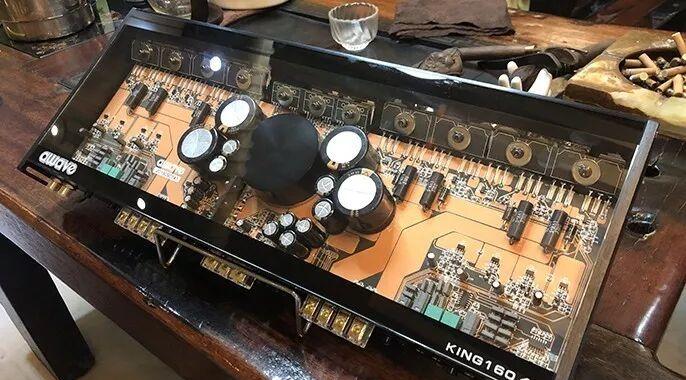
5. Main sound field power amplifier: Aiwei four-channel flagship power amplifier. This amplifier not only has exquisite appearance and craftsmanship, but its sound quality performance fully meets the high-fidelity standard. The abundant power reserve of 160 watts per channel provides a solid control foundation for the speaker. At the same time, its sound style is delicate and soft, and its dynamic performance is balanced and linear. It is a reliable power source for driving the active two-way frequency of the front sound field.
6. Bass amplifier: American Laifu R 2-500. 1 D high-power single-channel power amplifier. Specifically designed to drive subwoofer units, ensuring clean, powerful and transient energy support at low frequencies.
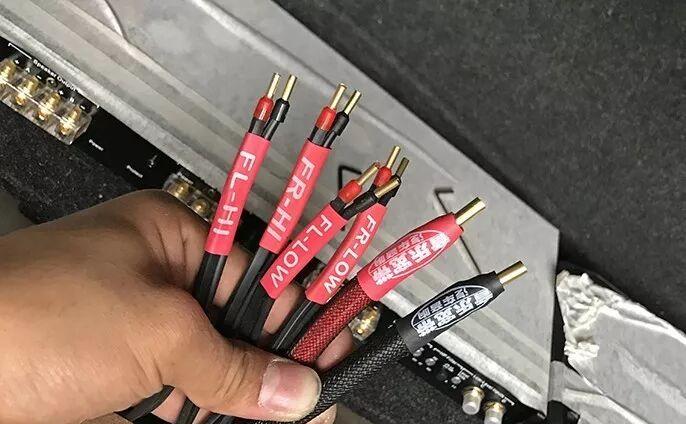
7. Connecting the context: American Magic Sound brand high-quality speaker cable. Excellent wire is the “highway” to ensure low signal loss and high purity transmission.
8. Acoustic foundation engineering: The key parts of the whole vehicle (doors, chassis, wheel arches, etc.) are systematically constructed with Japanese flute sound insulation materials. A complete HiFi system must be built on a relatively quiet and stable acoustic platform. Sound insulation of the whole vehicle is an indispensable cornerstone for improving sound quality clarity and reducing noise interference.
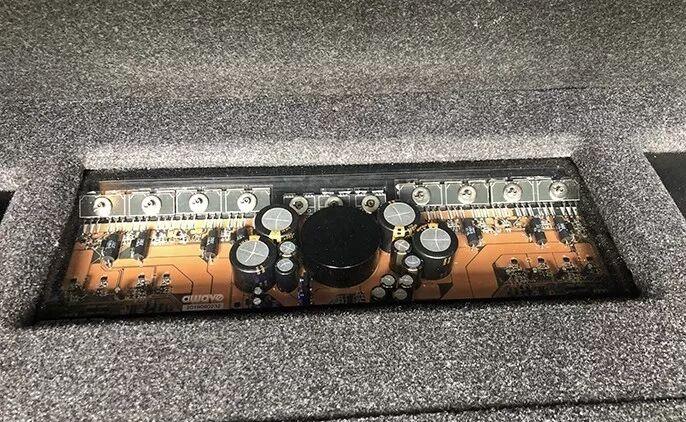
Close-up of Aiwei’s four-channel flagship amplifier.
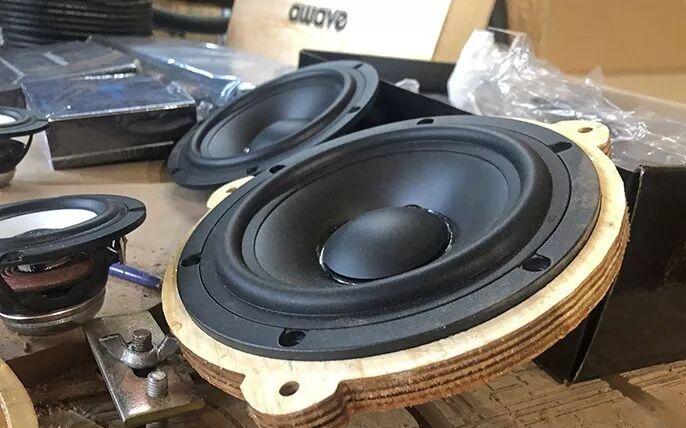
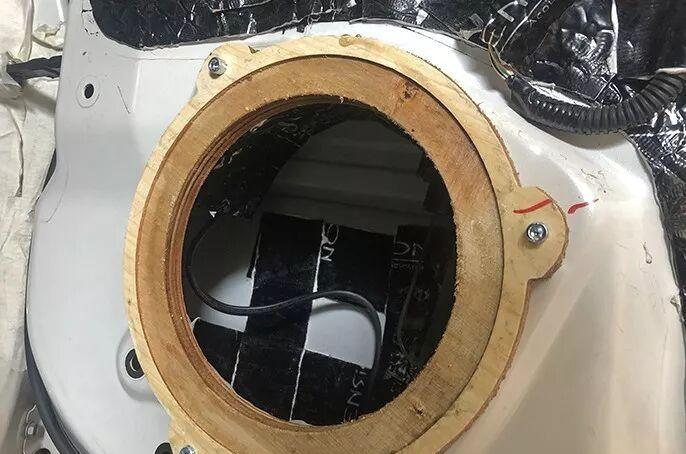
Next, let’s examine the key process details in this modification one by one according to the construction sequence. It starts with the speaker installation of the door: it all starts with a precise pedestal. According to the original door panel structure and horn size, we customized a special horn gasket that perfectly matches.
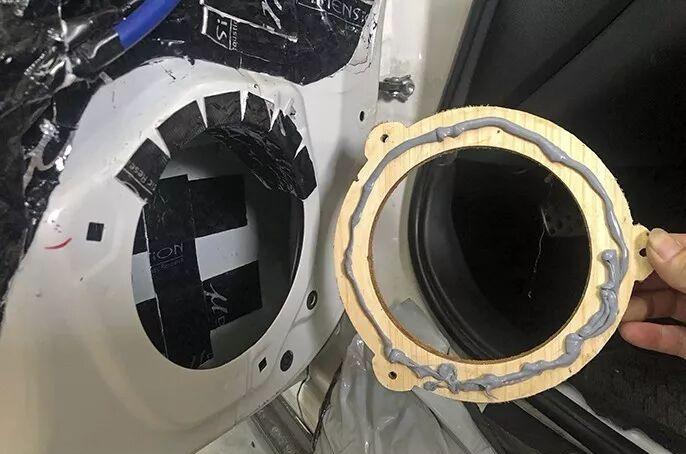
Before installation, the finished gasket will be evenly coated with high-quality sealant on the joint surface. This step is very important, it can effectively prevent “acoustic short circuit” between the door cavity and the back of the horn, and improve the efficiency of medium and low frequencies; At the same time, it has waterproof, dustproof and shock-absorbing functions to ensure the stability of long-term use.
The washer is securely fastened to the door panel sheet metal using socket socket stainless steel screws. Stainless steel material has strong corrosion resistance and ensures long-term stability.
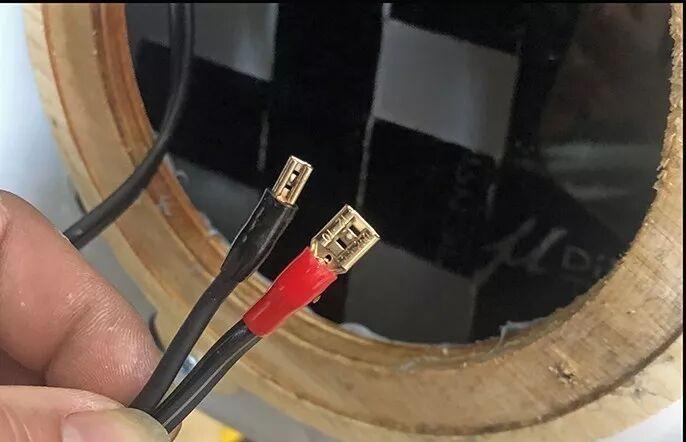
The horn end adopts strongly crimped in-line terminals to ensure good contact and minimal resistance.
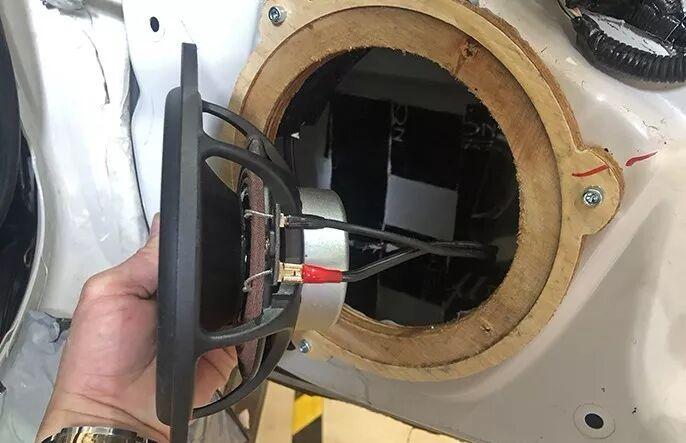
The speaker body is also fixed on the washer with hexagon socket stainless steel screws to ensure absolute stability and no resonance.
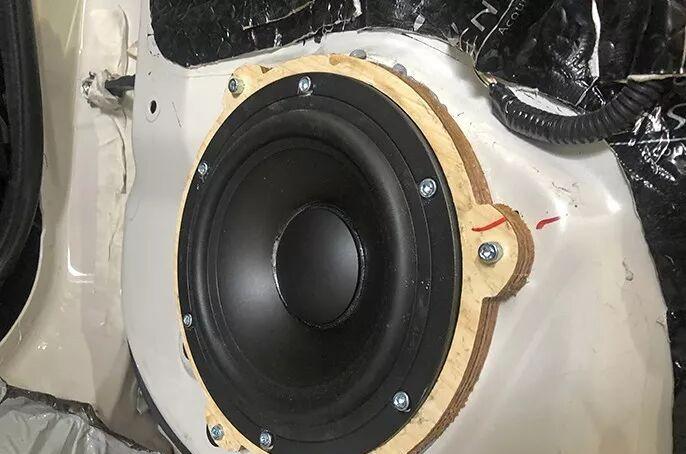
At the end of installation, sealant is added again at the edge of the joint between the speaker and the gasket to achieve double sealing guarantee.
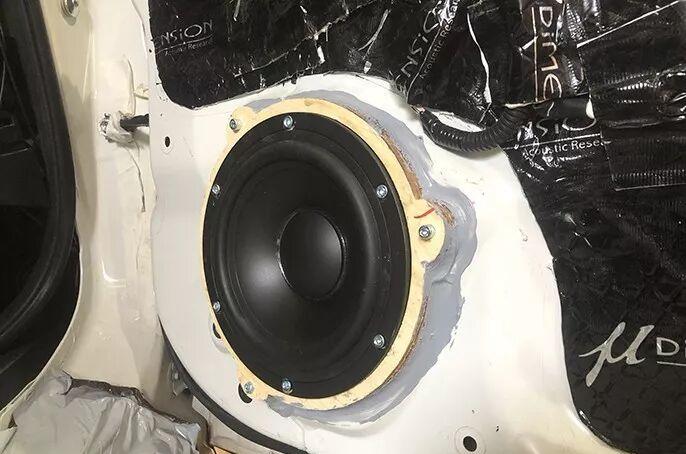
The overall effect after the installation of the woofer unit in the door panel is stable, sealed and professional.
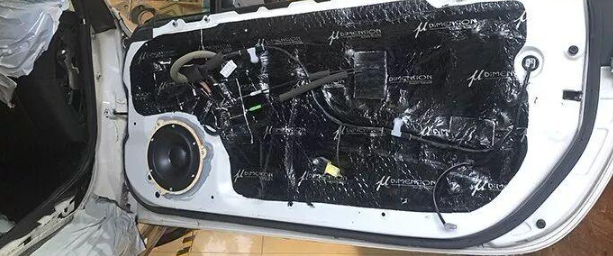
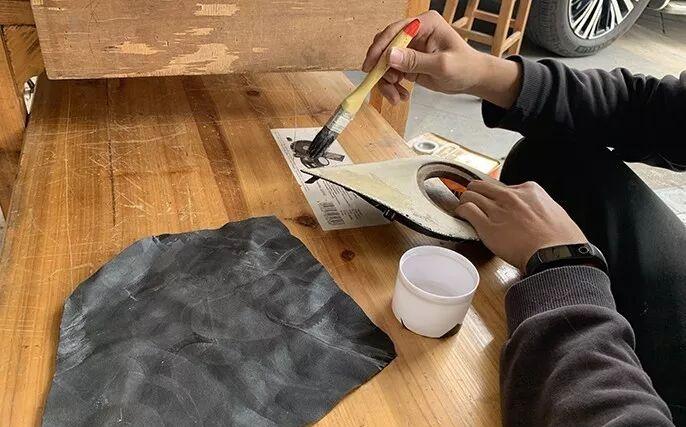
The next step is the positioning and installation of the tweeter. In order to obtain accurate sound field height and directivity, we made a special A-pillar inverted mold base for it. First of all, the mold is finely polished and modified.

After the mold is finalized, it is covered with black nubuck leather coordinated with the interior style to enhance the visual texture.
The effect of the finished production of the tweeter box.
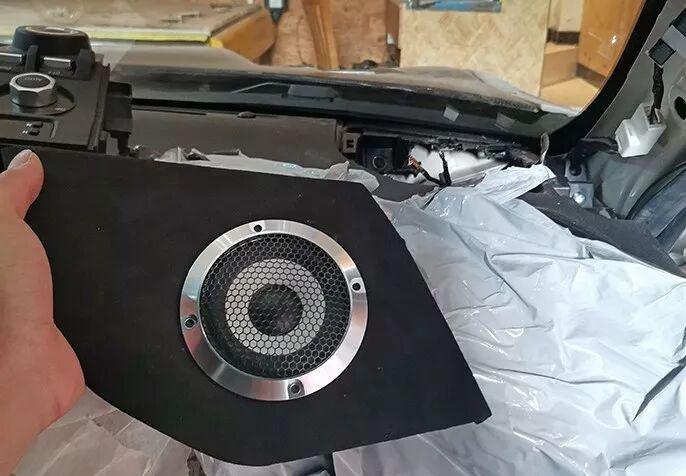
The detailed effect after installation to the A-pillar is integrated with the original car interior.
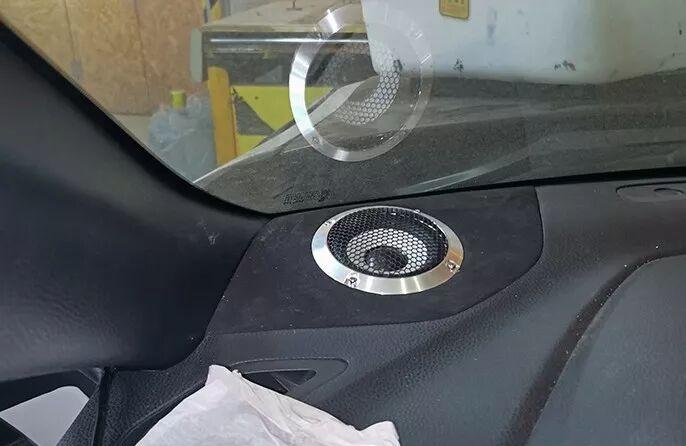
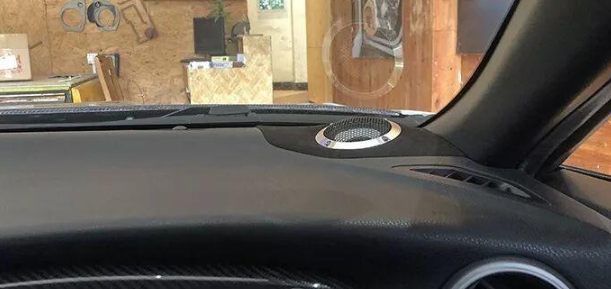

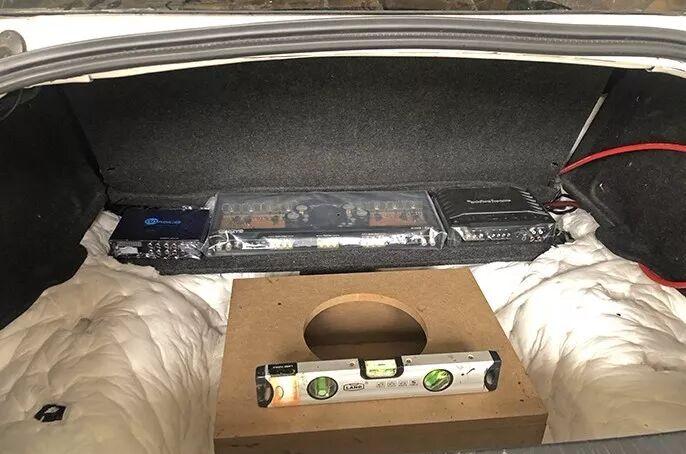
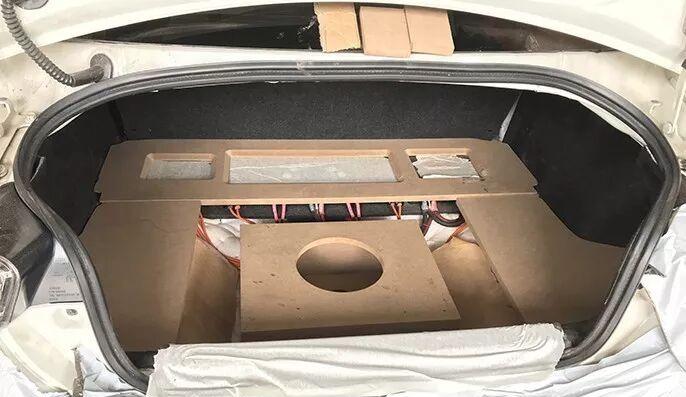
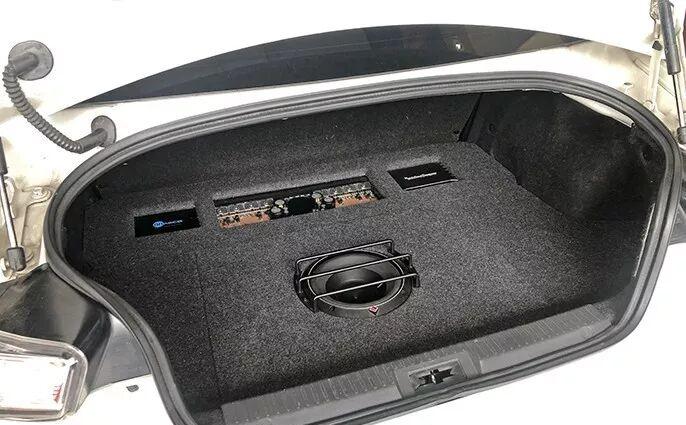
Trunk space is particularly at a premium for sports cars. The owner decisively decided to abandon the uncommonly used spare tire and transform the original spare tire position into a “audio cabin” where equipment such as subwoofer and power amplifier are placed. The overall layout concept is shown in the figure below, striving to achieve functional integration with minimum space occupation.
In the design of bass box, we strongly recommend and implement the inverted (opening) box scheme to car owners. Although its design, production difficulty and cost are higher than those of a simple closed box, its acoustic advantages are significant: under the same unit and power, it can obtain deeper low-frequency dive, richer sense of volume, more elastic low-frequency texture, and faster rhythm response in big dynamic music segments. In order to pursue better low-frequency performance, we insist on adopting inverted design.
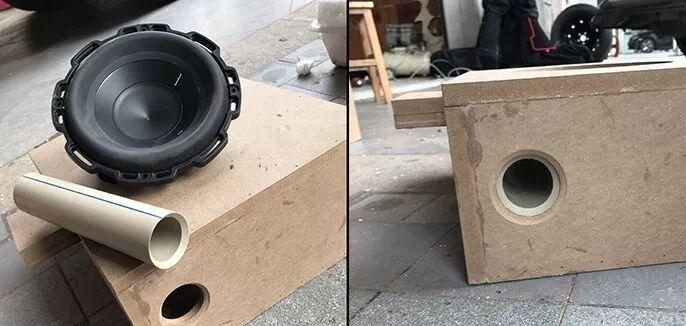
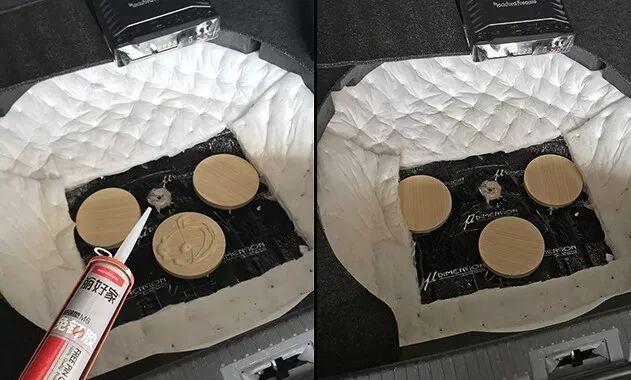
After the box is made, how to achieve a firm fixation in the trunk is another process that tests experience. Low-frequency vibration energy is huge, and poor fixation will not only produce annoying noise, but also consume low-frequency energy, resulting in loose sound. We adopted a multi-pronged reinforcement scheme: first, high-performance nail-free glue was used to initially bond the bottom plate of the box and the floor of the carriage; Using triangular stable structure for multi-point reinforcement; And cleverly use the holes of the fixing screws of the spare tire of the original car, and add a central locking bolt. After this treatment, the box is as stable as a rock, laying a physical foundation for pure and powerful low frequency.
The power supply, signal and control cables of all back-end equipment are routed in a standardized manner, marked and fixed.
The overall shape layout of the trunk is roughly shaped.
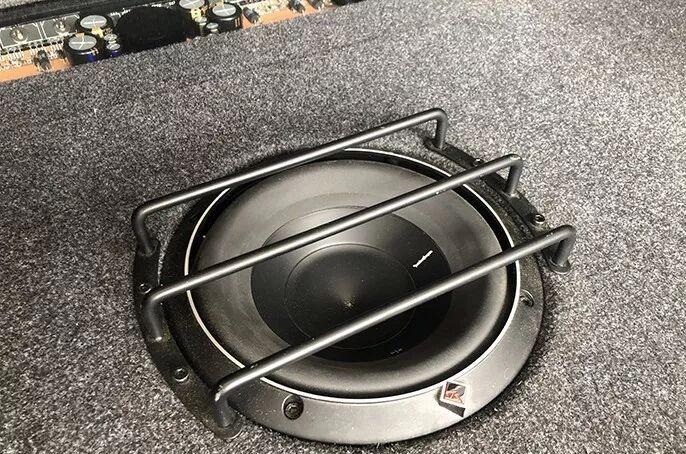
Install the Raffle P-Series 8-inch woofer. Filling the inside of the box with acoustic sound-absorbing cotton in an appropriate amount can adjust the equivalent volume of the box, optimize the low-frequency response characteristics, and make it closer to the design goal.
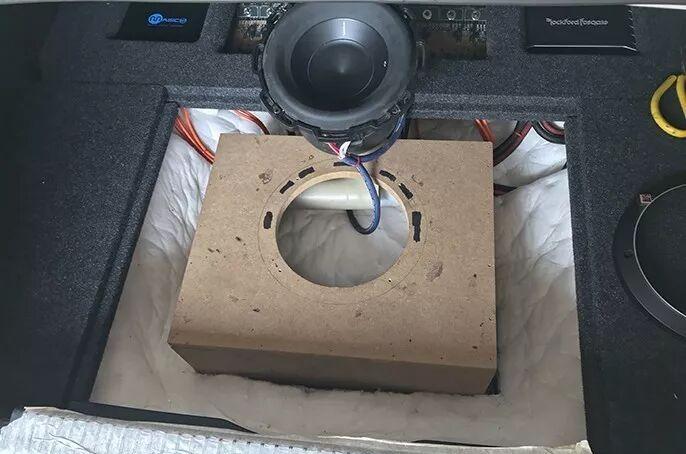
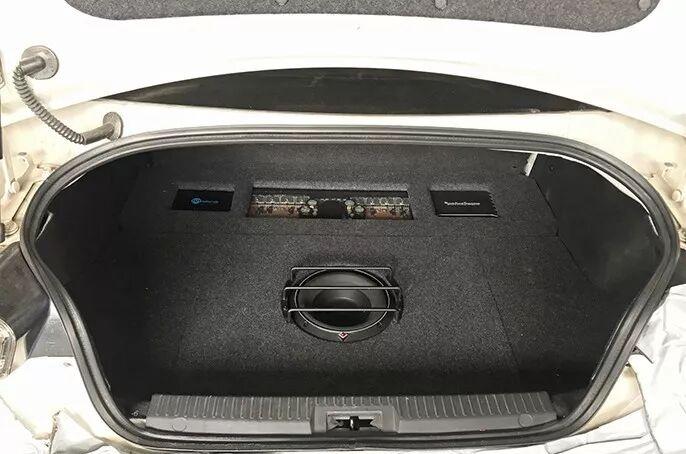
The final completion effect of the trunk process. The 8-inch woofer unit of Laifu is installed in place, the cabinet is finely made, and the inverting hole is clearly visible.
Aiwei flagship four-channel power amplifier and Laifu single-channel bass power amplifier are installed side by side, with regular layout and thoughtful heat dissipation.
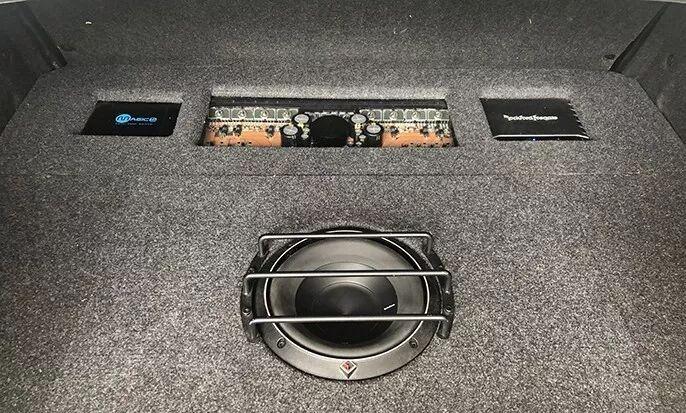
The entire trunk modification finally presents a simple, atmospheric and integrated visual effect, which is believed to meet the aesthetic requirements of car owners for both interior beauty and function of sports cars.
Finally, the Pioneer DEH-Z 5250 BT host is perfectly installed in situ at the central control position of the original vehicle. The operation interface is intuitive, coordinated with the original car interior, and the visual experience is good.
In the actual experience, this pioneer host shows its comprehensiveness as an excellent multimedia audio source. Its CarPlay function has good compatibility, stable and fast connection, and truly realizes seamless and intelligent interconnection between mobile phones and cars. The response speed of the operation interface of the host system is extremely fast, without any lag, and the user experience is excellent. In terms of functions, it supports CD/DVD disc playback, USB reading of various high-definition audio formats, high-definition Bluetooth calling and audio transmission, and has the ability of reversing image input. The most rare thing is that while its functions are comprehensive, its audio playback quality has not compromised: the sound background is quiet, the spatial sense of music is open, the details are rich, and the overall listening feeling maintains the clear, accurate and energetic sound style of pioneer brand, which is fully competent for the audio source task of this HiFi system.
You May Also Like

Three or two-way? A car enthusiast’s true mind and final choice, a review of the entire process
Reshaping the acoustic genes of Audi A 4: the precision acoustic revolution brought by Japan’s Biwei DSP processor