
The neglected upgrade shortcut: the reshaping of the hearing experience brought by car audio cable replacement
In building a complete sound system, wires play a vital role, and their status is like the sophisticated and indispensable blood circulation network in the human body. It undertakes the mission of lossless transmission of audio signals from the source to the terminal. High-quality audio wire is not just a simple conductor connection, but a precision component integrating electricity, materials science and acoustics. Excellent wires can minimize the loss and attenuation of signals during transmission, effectively resist the interference of external electromagnetic clutter, and ensure that the most original and weakest music details can be completely delivered to power amplifiers and speakers. What’s more, high-quality wires with different materials, structures and even weaving processes will slightly retouch the background color of the sound with their unique “personality”, which will play a role in optimizing the overall timbre balance and enhancing the texture of music. This is already one of the tacit tuning secrets of senior audio enthusiasts.
There is a classic adage circulating in the audio industry: “When you play with audio, you play with electricity and wires in the end.” This sentence profoundly reveals the irreplaceable basic position of power supply and signal wires in a set of Hi-End system that pursues the ultimate. However, for many enthusiasts who are new to this field, its importance is often concealed by the light of “big pieces” such as speakers and power amplifiers. It takes a certain period of listening experience accumulation and systematic comparison to gradually realize their subtle and critical influence in shaping the final sound appearance.
This characteristic is particularly obvious in the active frequency division system of car audio with more complex structure and almost demanding signal purity requirements. Take the audio signal line, the “nerve” connecting the sound source, processor and power amplifier, as an example. It transmits a low-level analog AC signal that is extremely fragile and easily contaminated. Therefore, an excellent audio cable must have excellent shielding performance to isolate interference, and carefully designed conductor materials and internal structures to ensure signal continuity and integrity. Different conductor materials (such as oxygen-free copper, single crystal copper, silver, etc.) and stranding methods will have an audible impact on the transmission characteristics of signals, resulting in subtle differences in sound styles. The core of the Barney BG 302 D audio cable used in this case is the use of single crystal copper with a purity of 7 N (99.99999%) as the conductor. The internal grain boundaries of single crystal copper almost disappear, the electron flow resistance is extremely low, and the continuity and fidelity of signal transmission are far better than those of ordinary copper. The improvement of sound quality brought about by the use of this material is often not a subtle “difference”, but a clearly discernible “leap”-even listeners who are self-modest as “auricularia auricula” can easily feel that the music picture becomes clearer and more stable, and the emotional expression is more abundant and direct in comparison.
Below, we will present the auditory change of “changing cables is like changing machines” through the actual cases of the audio systems of two different models before and after upgrading and using Barney BG 302 D audio cables.
Case 1: Toyota Reiz in-depth active system upgrade
The system structure is luxurious: Alpine A 09 professional digital player is used as the pure sound source, and the signal is transmitted to Magic Cube six-channel power amplifier via Barney BG 302 D, which drives a set of German zero brand three-way speakers for active frequency division, and the American DD 6.5-inch subwoofer perfects the low frequency. The quality of this system itself is already excellent, and it has a strong power to reveal wires.
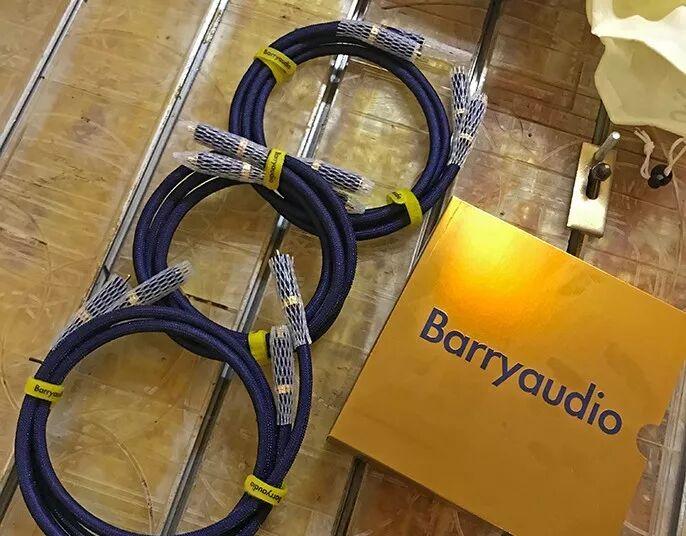



After replacing the Barney BG 302 D audio cable, the performance of the system is as expected in the technical description of the product: the background tranquility of the sound has been audible, and the music details emerge more easily and naturally from the dark background; The texture of the whole frequency band, especially the density and luster of the medium and high frequencies, has been significantly enhanced, and the body sense of the musical instrument and the mouth shape of the vocal are more condensed and accurate.
Case 2: Comparative upgrade of Toyota Highlander system wires
The system configuration is equally professional: the original main engine is used as the sound source, and the output signal is connected to the Magic Cube six-channel power amplifier through different wires to drive a set of Rainbow SL-C 6.3 pro three-way active system, supplemented by American DD 6.5-inch bass. This upgrade provides a direct “A/B comparison” opportunity.

This is the wire used before the upgrade. It is an entry-level product of Barney brand. Although it can guarantee the basic signal transmission, it leaves room for improvement in the ultimate performance.

Installation status after replacement of Upper Barney BG 302 D audio cable:

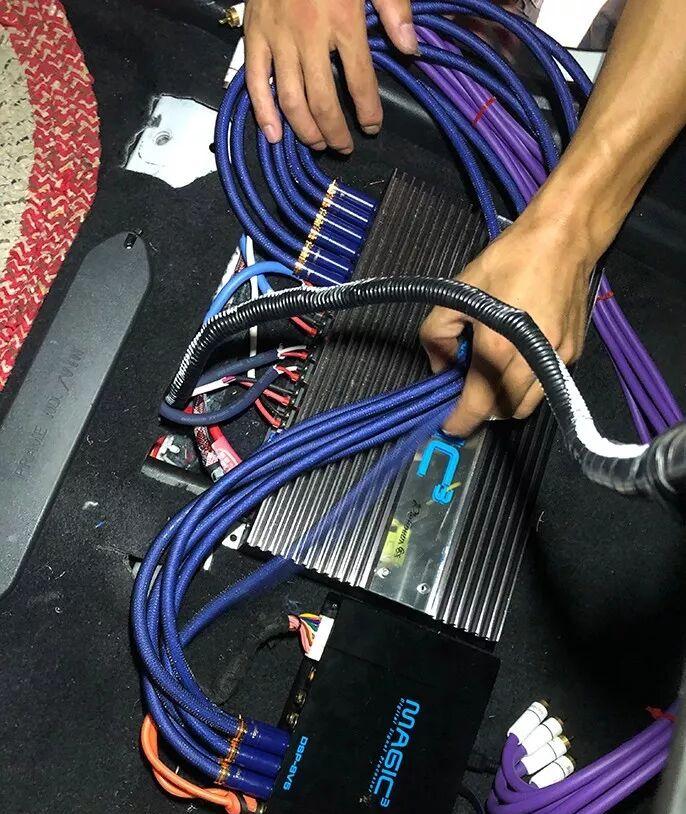
The most intuitive feeling of the sound quality change brought about by this line change is “the broadening of the sound range”. The sense of space of music has been extended vertically and horizontally, and the sound field has become more open and regular. The performance of the mid-to-high frequency band is particularly outstanding: the sound is no longer thin and bright, but adds solid thickness and rich texture. Vocals and musical instruments sound more real “flesh” and charm, and the appeal and durability of music have been greatly improved. This clearly proves that even when the sound source is not top-level, a high-quality audio cable can still bring global and positive optimization to the whole system.


You May Also Like

Art of Reason: Honda Crown Road audio modification case reveals the system philosophy of “less is more”
Revealing the “black technology” of Biwei speakers: Why can human voices seem to be suspended in the air? The answer lies in the “feeling of being out of the box”