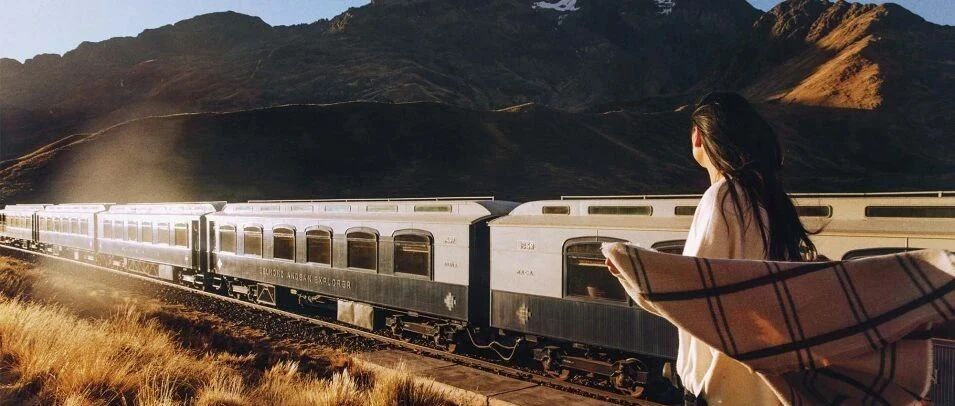
Peruvian Plateau Night Train: Crossing the Andes and Heading to the Transparent Stars of Lake Titicaca
Sitting in the waiting hall, holding Chicha Morada juice brewed with Peruvian local purple corn, all the guests are full of expectations and are ready to board the first luxury sleeper train in South America, known as the “Andean Explorer”. Flight attendants in crisp white shirts and tan casual jackets are carrying luggage, flowers and all kinds of supplies in an orderly manner. They will accompany us from Cusco, the ancient capital of the Incas, all the way to Puno, and finally reach Lake Titicaca, the highest navigable lake in the world.
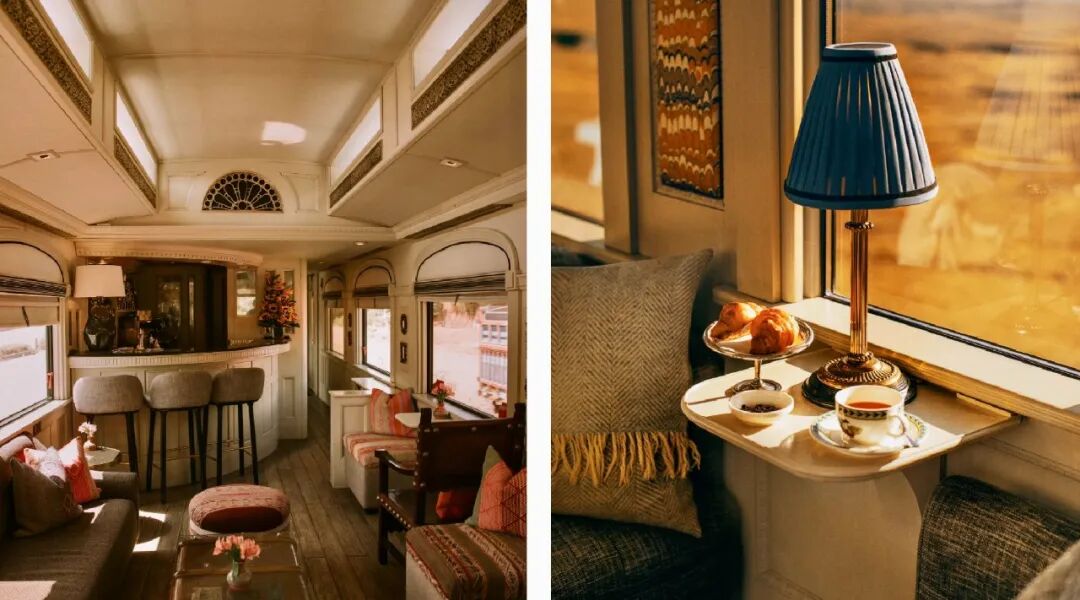
Although the train is owned and operated today by Peruvian Railways, its legendary journey began on another continent: between 1999 and 2003, it sped along the east coast of Australia under the name “South Pacific Express”. It arrived in Peru in 2016, and after an exquisite and comprehensive renovation, it is now escorting guests between the magnificent landscapes of the Andes with its untouched elegance. Each carriage is named after Quechua and carries Andean culture: such as the bar carriage named after the root vegetable “Macha”, the full-view carriage named after the plateau feather grass “Ichu”, and the sleeper carriage named after the local tree “Tara”.
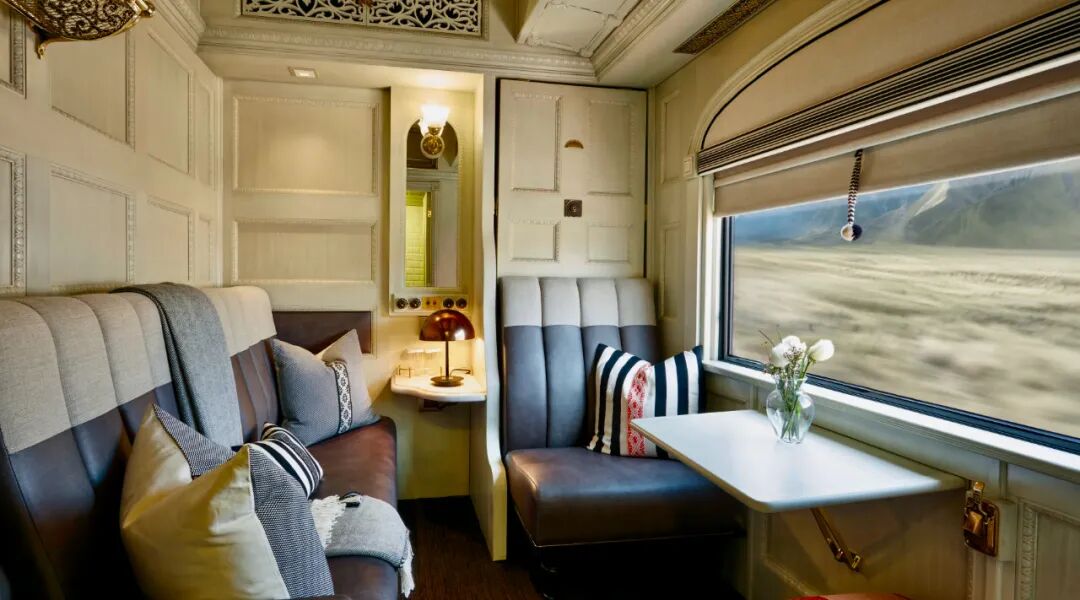
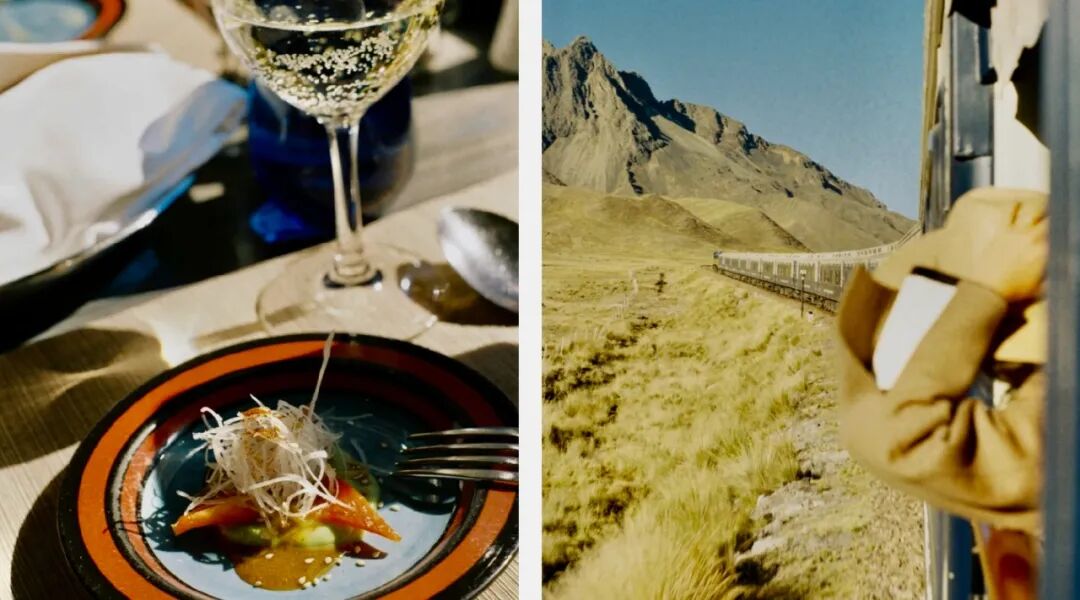
The cabin space is exquisite and well-equipped. The folding sofa bed faces the spacious viewing window, and comfortable leather seats are placed parallel to it. Sitting by the window, opening the curtain, the picture scroll of the Andean countryside slowly unfolds in front of you: in the green fields, the working farmer stops and waves; In the distance are dazzling snowy peaks, and a few alpacas hide into the bushes. At lunch, ceviche with shredded red onions and crispy Peruvian corn kernels rocked gently with the train, as if they were with us, excited by the scenery outside the window.
The train stops at Lakchi. There are well-preserved ruins from the Inca era, including a unique mound-style granary used to store corn and quinoa, and the remains of a magnificent temple 91 meters tall dedicated to Viracocha, the Inca god of creation. Before it was destroyed by the Spanish conquistadors, the temple had perhaps the largest span of single gabled roof in the entire Inca Empire.
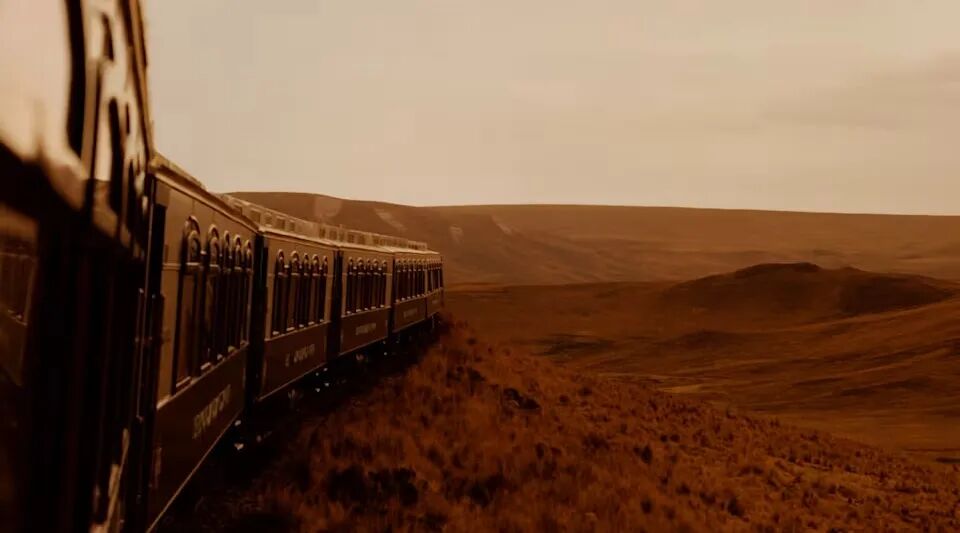
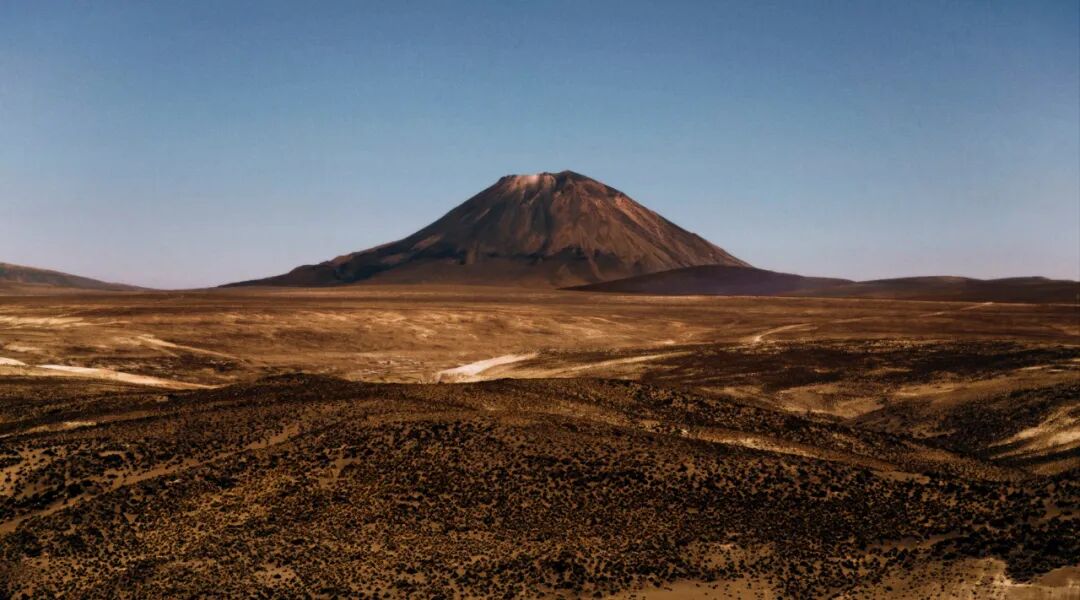
Mountain peaks rose from the ground in dreamy light and shadow. Before sunset, the train arrived at the highest point of this journey-Lalaya Pass at 4,335 meters. Passengers got off the bus one after another, and there was no other light around them except the train and the afterglow of the setting sun.
The golden sunset intertwined with the deep blues, dying the carriage with a fantastic color like a Wes Anderson movie. Everyone stood in silence, staring at the mountains. Those desolate and dark mountains, like swimming shadows of death, were peacefully immersed in a lavender twilight.
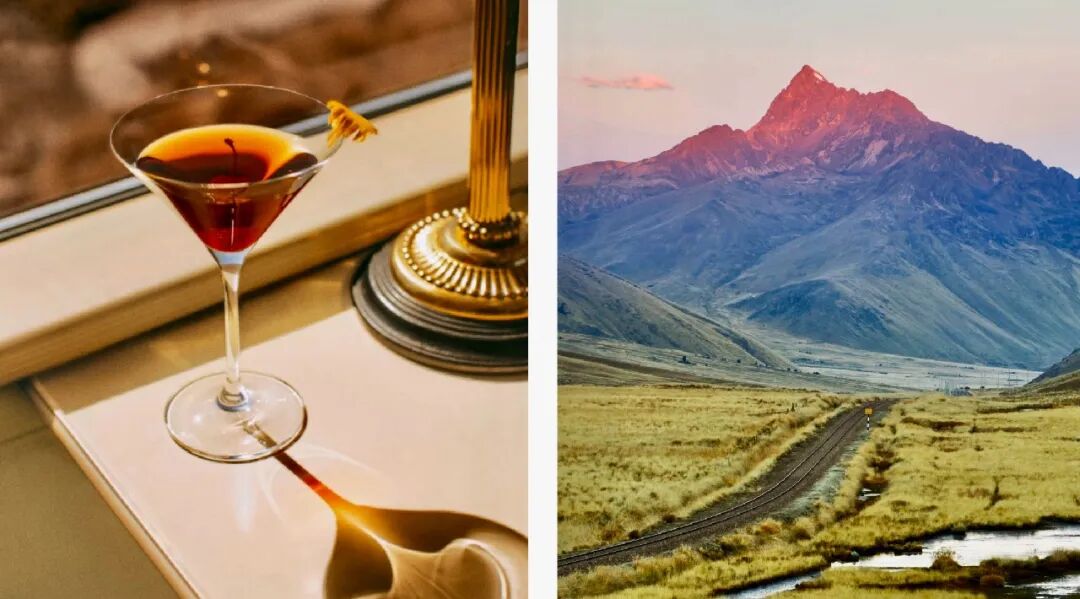
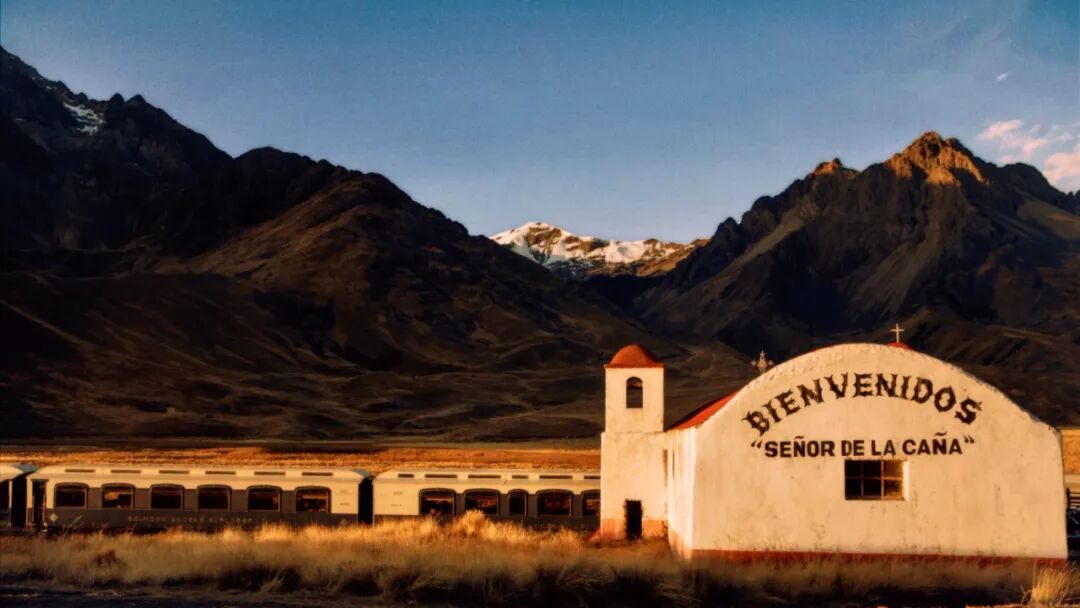
After returning to the carriage, the waiter served gin and tonic mixed with Peruvian gin. This gin is infused with distinctive flavors of pepper, calendula, verbena and lime. Flight attendants dressed in straight suits shuttled gracefully through the narrow aisle that swayed slightly, holding silver plates in their hands, and walking as light as ballet dancers. Before falling asleep, pace to the open viewing platform at the rear of the train, lean on the railing and look up at the night sky, which is a black forest full of stars.
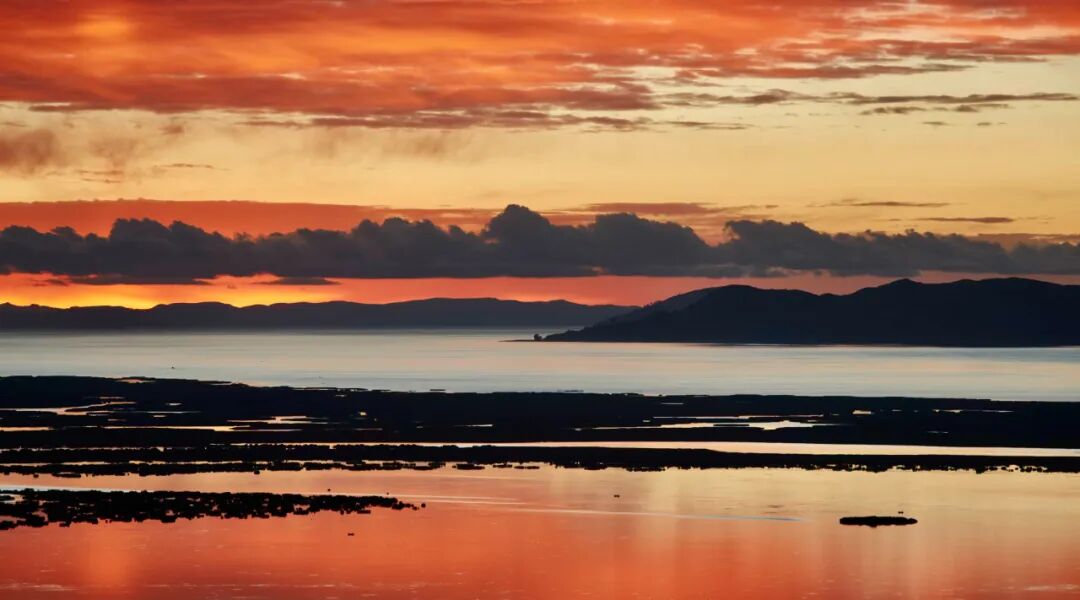
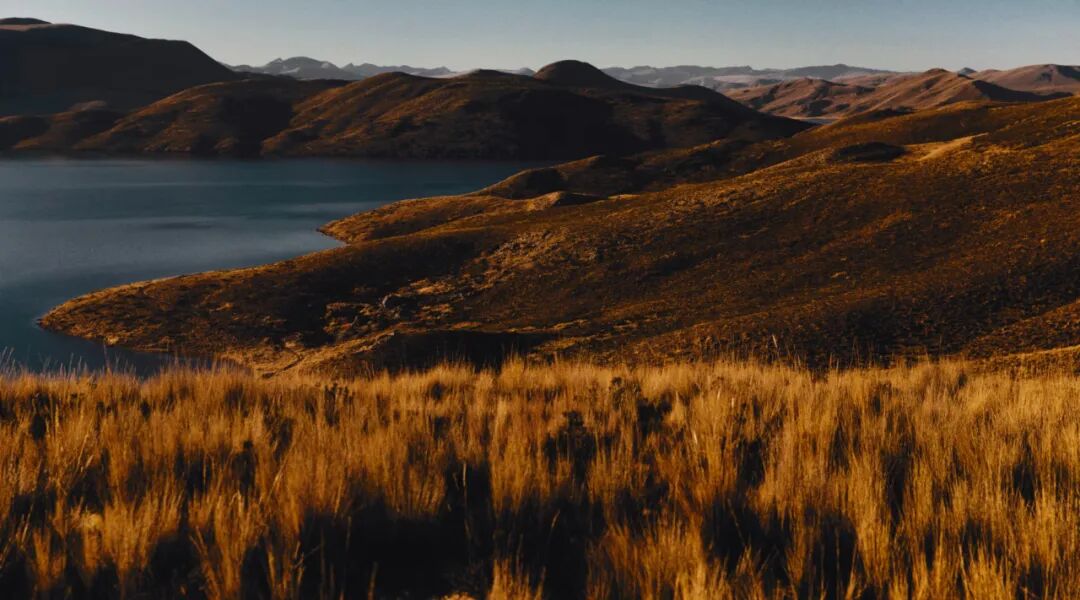
Before dawn the next day, the train quietly arrived at Lake Titicaca. According to ancient legend, Manco Capac, the founding monarch of the Inca Empire, was born from this icy lake at an altitude of 3,800 meters. Get off the train and stroll along the railway tracks next to the lake. Soon, the rising sun pokes its head out of the horizon. The light slowly spread out, and the thick sea of clouds in the sky surged like huge waves. However, the lake did not move at all, as if it was instantly frozen by the severe cold of the plateau and the thin and transparent air. It was sucking the finest golden thread between heaven and earth with the smallest light waves.

You May Also Like
The Secret Land of Shannan, Tibet | Kulagangri Snow Mountain Hiking 6-day Pilgrimage
Great summer resort in Asia, there’s always a place for you