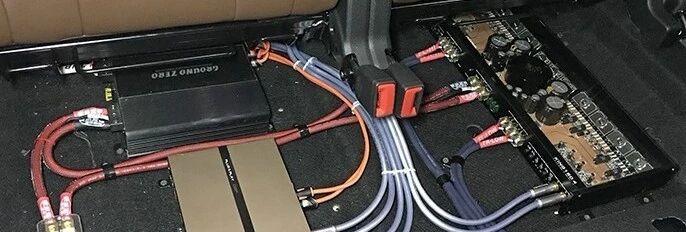
The ultimate buying guide for car audio subwoofers: an in-depth showdown between the 8-inch listening party and the 10-inch vibration party
When planning a sound system upgrade for your car, have you ever struggled with the choice of subwoofer unit size? What lies in front of us are two seemingly completely different paths: the 8-inch scheme of the “listening party”, which pursues precision, delicacy and flexibility, or the 10-inch route of the “earthquake party”, which advocates surging shock and full of energy. This is not a simple size difference, but about your in-depth choice of music understanding, listening habits and even the acoustic environment in the car. Today, Music Broadband will uncover the underlying logic of technology choices in this industry for you, and help you make wise decisions without regrets.

A common cognitive misunderstanding is that the size of subwoofer is absolutely proportional to low-frequency expressive force. However, the fact is far from that simple. There are essential differences in acoustic characteristics of units of different sizes-
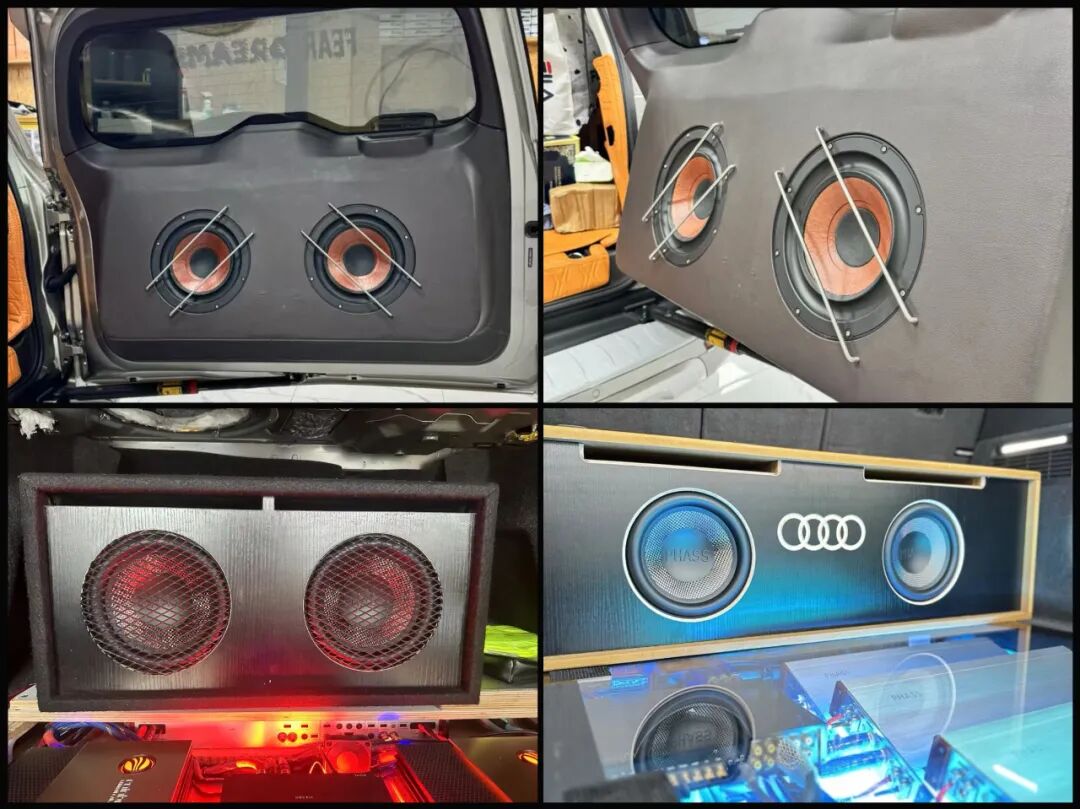
✅ 8-inch subwoofer: Its advantages lie in faster transient response and more accurate low-frequency control. It can clearly restore the details of drum beats, the elasticity of bass strings and the overtone texture of double bass, bringing a clean, compact and layered low-frequency performance. It is especially suitable for popular music, jazz music, classical music and most vocal works that pay attention to the texture of musical instruments and the emotional expression of vocals. It is the best choice to realize the concept of “high fidelity” playback.
✅ 10 “subwoofer unit: With its larger diaphragm area, it has inherent advantages in energy output and somatosensory vibration in extremely low frequency bands, and can create a more enveloping and impactful low-frequency atmosphere. This style is especially suitable for electronic music, rock, Hip-hop and other music types that emphasize rhythmic energy and low-frequency shock, or for use in scenes that pursue the effect of “bombing the street”. However, if the adjustment is improper or the system matching is poor, it is indeed easy to have problems such as low-frequency procrastination, blurred details and even “roaring”.
Industry Insights: A Common Choice for Top Car Audio Brands
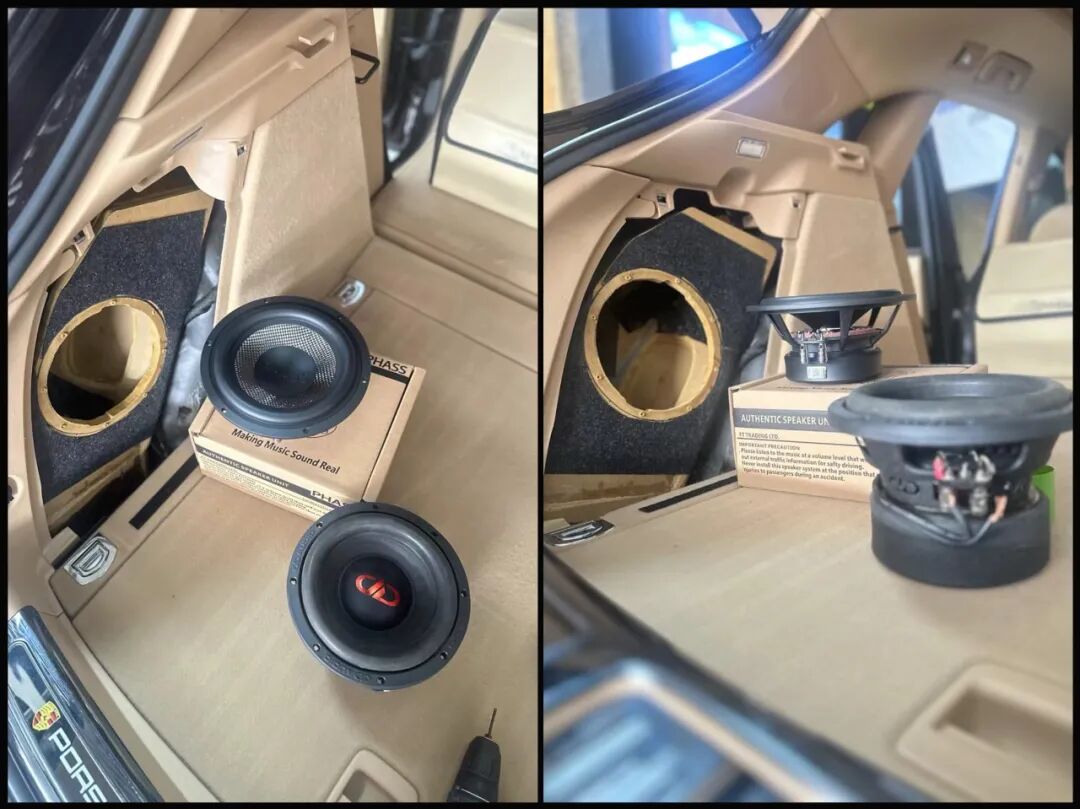
A phenomenon worth pondering is that among the product lines of top international brands focusing on the field of car audio, such as Japan’sBEWITHWithShengli Chuangyin By Sonic Design, its subwoofer products are often mainly 8 inches or smaller, and there are few models that blindly pursue large sizes. Why do these “pure-blooded” professional brands choose this way?
Behind this is a rigorous consideration based on physical acoustics and automotive environment:
1. Acoustic adaptability for limited spaces in vehicles: A car compartment is a relatively small and complex enclosed space. An oversized woofer unit requires a larger cabinet volume and a longer stroke to drive. It is difficult to obtain ideal control in a limited space, and it is easy to stimulate serious standing waves and resonance, which destroys the clarity of sound instead. The 8-inch unit strikes a better balance between size, power requirements and control, making it easier to achieve accurate and clean low-frequency reproduction in the car.
2. Reductive Philosophy Loyal to the Essence of Music: The primary goal of top audio brands is to accurately restore the information in the recording, rather than create excessive low frequencies out of thin air. With its excellent transient characteristics, the 8-inch unit can better capture and reproduce the true texture and dynamic changes of low-frequency instruments in music, pursuing “texture” rather than simple “sense of quantity”.
3. Comfort and health of long-term listening: Continuous, excessive and uncontrolled low-frequency pressure (often caused by mismatched large-size subwoofers) can easily lead to auditory fatigue, and even discomfort such as dizziness and chest tightness, which is the so-called “head blasting”. A properly tuned 8-inch system can provide sufficient low-frequency support while ensuring the ease and pleasure of long-term listening.
The core point of view of senior players: space determines size, and texture trumps body feel
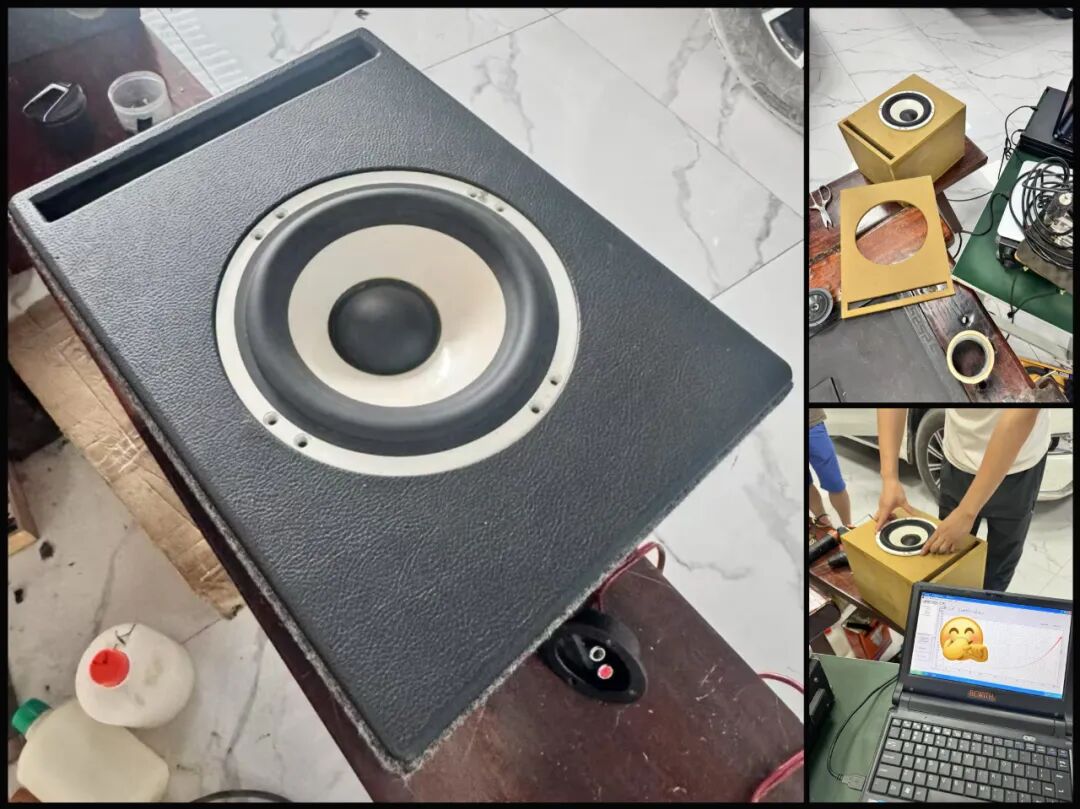
According to the veteran of car audio modification, the first principle of choosing subwoofer is “spatial adaptation”. Within the limited cabinet volume of a car or ordinary SUV, a well-designed and well-driven 8-inch subwoofer unit is fully capable of achieving:
► Delicate reproduction of real musical instrument texture: Whether it’s the foot drum impact of jazz drums, the beef tendon flavor of Double Bass, or the low frequency of electronic synthesizers with a sense of lines, it can be clearly expressed.
► Clear and distinct low frequency levels and textures: In complex music passages, different low-frequency instruments can still maintain separation and won’t get muddled.
► Hearing comfort that lasts for a long time: As the cornerstone of music, low frequency should support and set off, rather than usurping the host. Just the right 8-inch bass can blend into the whole music, making people immersed in it without feeling tired.
► In contrast, the forced use of 10-inch or larger units in mismatched spaces is often in the pursuit of strong “somatosensory vibrations”, which sometimes sacrifice the clarity, speed and original hierarchy of music, deviating from the original intention of hi-fi music playback.
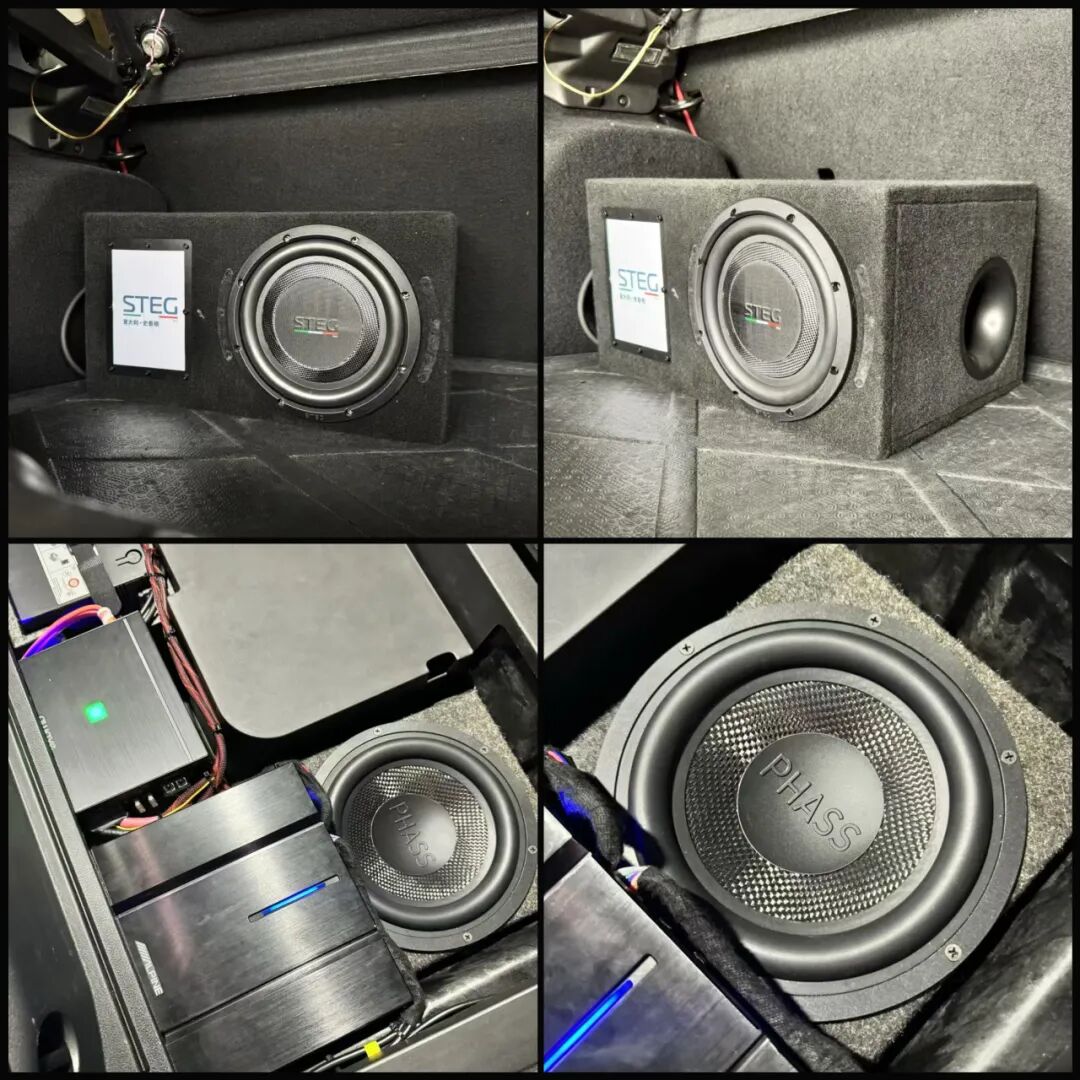
The ultimate sound test: Your ears don’t lie
The ultimate criterion for judging the quality of a subwoofer system is whether it allows you to hear more details and emotions of the music itself. Please check with the following question:
• Can you hear the subtle timbre differences caused by the drum skin tension and percussion strength when different drummers hit the snare drum?
• When listening to bass performance, in addition to the stable rhythmic foundation, can you feel the explosive force and elasticity of the moment of finger Slap and the smoothness of glissando?
• Does the pizzicato of cello or double bass have a solid form and can hear the warm overtones of the resonance of the cavity?
If a bass system gives you an unprecedented clear perception of the above details, it is a successful system whether its size is 8 “or 10”. Our suggestion based on massive modification experience and acoustic principles is: For most car owners who pursue comprehensive, audible and high-fidelity music enjoyment, a high-quality and properly tuned 8-inch subwoofer system is often the smarter and better choice that can stand the test of time. It uses precision rather than brute force to interpret the acoustic wisdom of “less is more”.


You May Also Like

From structural noise reduction to acoustic optimization: in-depth solutions for Honda Crown Road’s entire vehicle sound insulation project

The neglected upgrade shortcut: the reshaping of the hearing experience brought by car audio cable replacement