From structural noise reduction to acoustic optimization: in-depth solutions for Honda Crown Road’s entire vehicle sound insulation project
Automobile sound insulation and noise reduction is essentially a systematic project to encircle, absorb and block noise through physical materials and scientific construction. The final effect is not simply determined by the brand or price of the selected materials, but depends to a greater extent on the construction team’s deep understanding of the vehicle structure, the accurate judgment of the noise path, and the almost instinctive process experience that has been tempered by thousands of vehicles. Nowadays, the production technology of mainstream sound insulation materials in the market is quite mature, and the performance differences are mostly within the controllable range. Therefore, for car owners, the real key and risk of decision-making lies in not being too entangled in the subtle parameters of materials, but carefully identifying the process standards and professional background of the construction party. Because the sound insulation project is obviously irreversible-once the effect is not good or there are hidden dangers after completion, the complexity of its dismantling and rework, the potential damage to the original vehicle parts, and the cost are often much higher than the initial installation. Choice is far more important than effort.
Our store has been deeply involved in the professional field of automotive sound insulation and noise reduction for more than nine years. What has accumulated over time is not only “countless” construction cases, but also an in-depth database of body structural characteristics and common noise sources of different brands and models, as well as a complete method system from protective disassembly and assembly to targeted treatment. We deeply understand that excellent sound insulation is not a simple coverage of materials, but a “customized medical treatment” based on acoustic principles and vehicle engineering. This time, a Honda Crown Road owner recognized our professional height through the word-of-mouth recommendation of an old customer, and then confidently entrusted the quiet project of his car and made an appointment for an exclusive construction period. In order to achieve the best comprehensive noise reduction effect, we have formulated a composite material solution for this car: the main body uses Japanese Dishen series products with balanced and reliable performance, and at the same time, the key resonance-prone parts are supplemented with higher-end Ukrainian CTK sound insulation materials. Its stronger damping characteristics meet specific challenges. The following is a detailed record of the entire process of sound insulation and noise reduction construction of this Honda Crown Road vehicle.
Step 1: Meticulous pre-construction protection
Professionalism begins with respect. Before commencing any dismantling work, we carry out thorough and meticulous protection of the vehicle’s interior, paint and vulnerable parts. Lay a special sheath and paste a protective film to ensure that the original appearance and value of the vehicle are not affected at all during the construction process.

Step 2: Systematic sound insulation of the chassis area
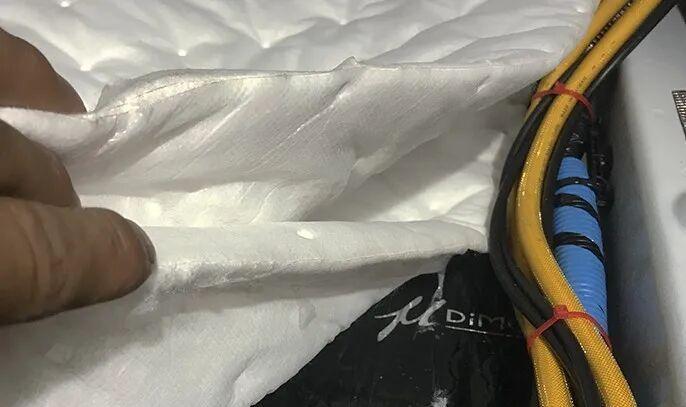
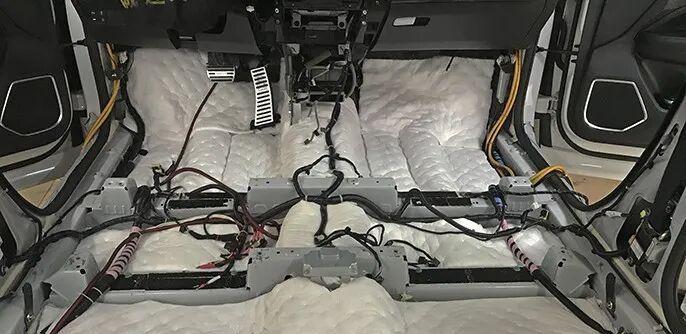
The chassis is the main channel through which road noise and exhaust resonance enter the cabin. We first safely removed the interior parts such as seats and carpets, exposing the intact chassis steel plate. Subsequently, professional cleaning tools are used to thoroughly remove the dust, oil and residual glue on the original car floor, providing an absolutely clean and dry adhesive base surface for the sound insulation material. After cleaning, start to stick the first layer of high-density shock absorber tightly. Each piece of material needs to be repeatedly compacted by professional rollers to ensure 100% fit with the steel plate, without bubbles and hollow drums, and maximize the suppression of sheet metal vibration.
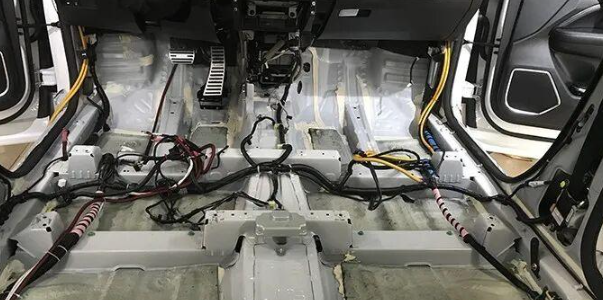
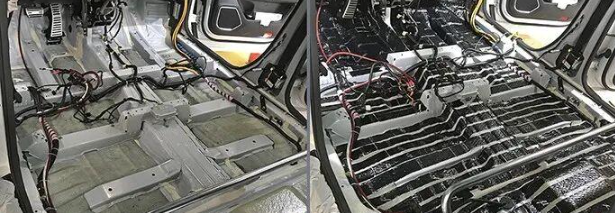
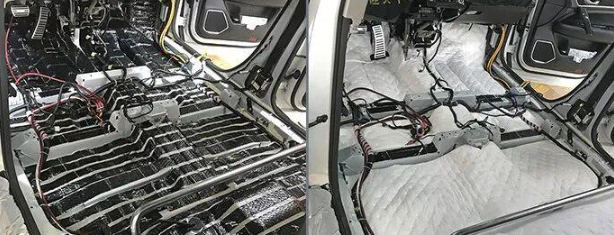
On top of the complete shock-absorbing layer, we laid a double layer of high-performance sound-absorbing cotton. This layer of soft and elastic material is designed to absorb the residual medium and high frequency noise after shock stopping, and further block heat transfer, achieving the dual effects of sound insulation and heat insulation.
Step 3: Targeted cavity filling technology
Large cavity structures such as longitudinal beams on both sides of the vehicle can easily form “tympanic membrane effect”, amplifying and conducting noise. To do this, we employ professional acoustic foam fillers, which are precisely injected inside these cavities. After the filler expands and solidifies, it can effectively break the resonance of the cavity and transform the original “noise amplifier” into a “noise absorber”. This has a significant effect on improving the quietness of the whole vehicle, especially eliminating low-frequency roar.
Step 4: Key attacks on wheel arches and fenders
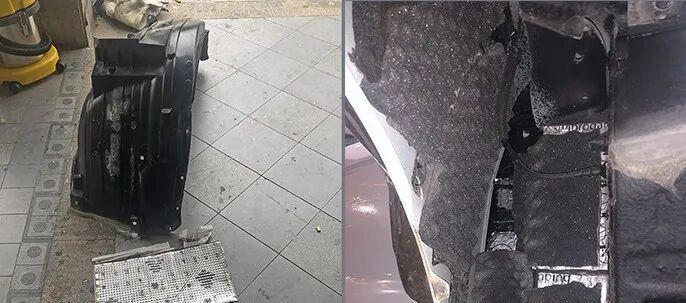
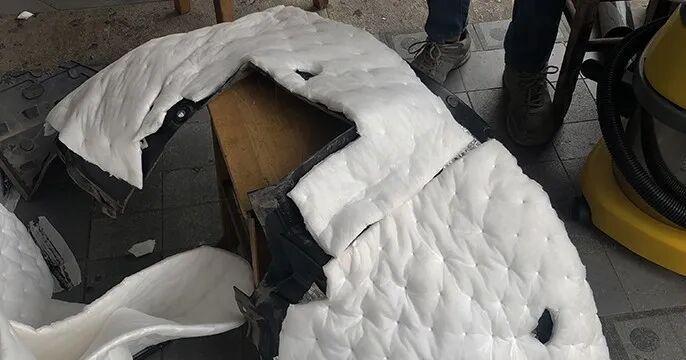
The tire noise caused by the friction between the tire and the road surface, as well as the knocking sound of flying stones, are mainly transmitted through the front wheel fender area. We remove the tire liner (inner liner), thoroughly clean and sound insulate the sheet metal inside it and the inside of the fender. Pasting anti-shock material here and covering it with a sound-absorbing layer is one of the most direct and effective ways to block road noise.
Construction Details: Make sure every twisty surface is tightly covered with material.
Step 5: Overall acoustic encapsulation of the trunk
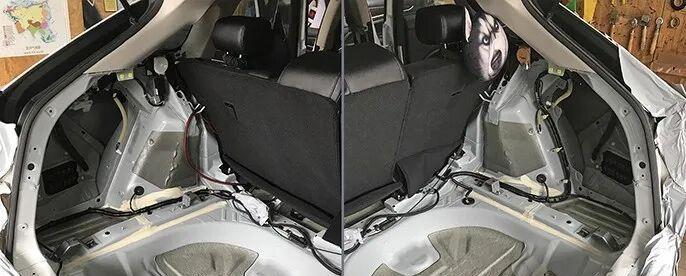
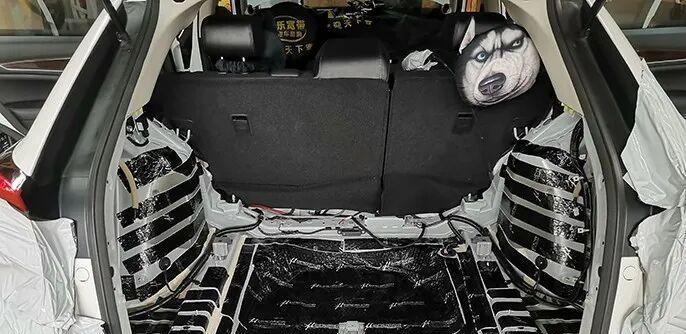
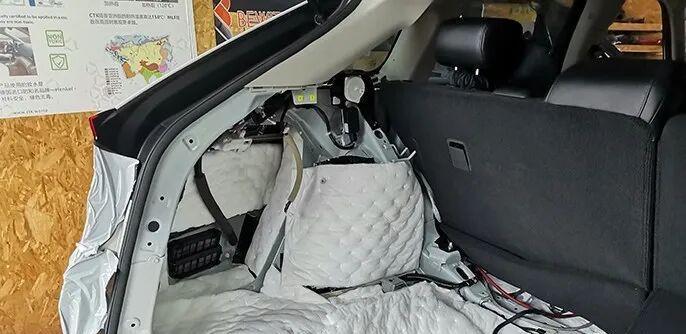
The trunk is a huge resonant cavity that is especially prone to gathering and amplifying low-frequency noise. We have carried out all-round sound insulation on the bottom plate of the trunk, the inside of the wheel arches on both sides, the rear fender and the inside of the rear tailgate. Through the composite application of shock-absorbing and sound-absorbing materials, the cavity resonance here is greatly weakened, making the rear of the driving carriage more quiet and stable.
Step 6: Detailing the rear tailgate
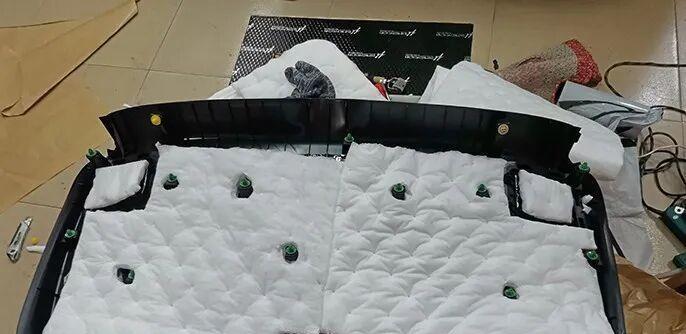
The rear tailgate serves as a large-area cover, and its internal cavities and weak sheet metal are also sources of noise. Shock-absorbing treatment can eliminate the aftershock when opening and closing the door and the abnormal noise that may occur during driving.
The final step: air tightness improvement-door seal strengthening
Wind noise mainly comes from the turbulent airflow between the gaps of the car body. After completing all the interior sound insulation, we installed high-quality special secondary sealing strips for the five doors on top of the original car sealing strips. This measure can significantly improve the closed air tightness of the door, effectively reduce the intrusion of wind sound when driving at high speeds, and is the finishing touch to improve high-speed quietness.
So far, a complete and in-depth Honda Guandao vehicle sound insulation and noise reduction project has been successfully completed. It is not a pile of materials, but a systematic acoustic optimization based on scientific analysis, rich experience and rigorous process. As a result, it will be transformed into a more quiet, comfortable and focused driving experience that car owners can personally feel during every drive.


You May Also Like
BMW 320 Li audio modification template: Japan’s Biwei AM three-way textbook-level installation brings good sound quality and details to your face

The Art of Space and Energy: Mitsubishi Outlander Seiko Customized American DD 8-inch Subwoofer Complementary Box Case